
Set up an aging parent's home from yours: the smart locks, cameras, sensors, and alert pendant that let you help without hovering.
What To Do After a Burglary: 7 Steps To Re-Secure Your Home and Prevent Future Burglaries
If your home was recently burglarized, take a deep breath. You're not alone, and there’s a clear path forward.
While a home burglary can feel deeply personal and unsettling, recovery is absolutely possible. With the right steps, you can restore both your safety and your peace of mind.
This guide walks you through exactly what to do after a burglary, from contacting the police and documenting missing items to securing entry points and improving your home security.
Each step helps you regain control and rebuild your sense of security, both emotionally and physically.
For many, that final step makes the biggest difference. A smart, professionally monitored system like one from Vivint does more than sound an alarm. It also connects you directly to emergency responders, giving you real protection around the clock.
It’s one of the most effective ways to prevent future burglaries and reclaim confidence in your home.
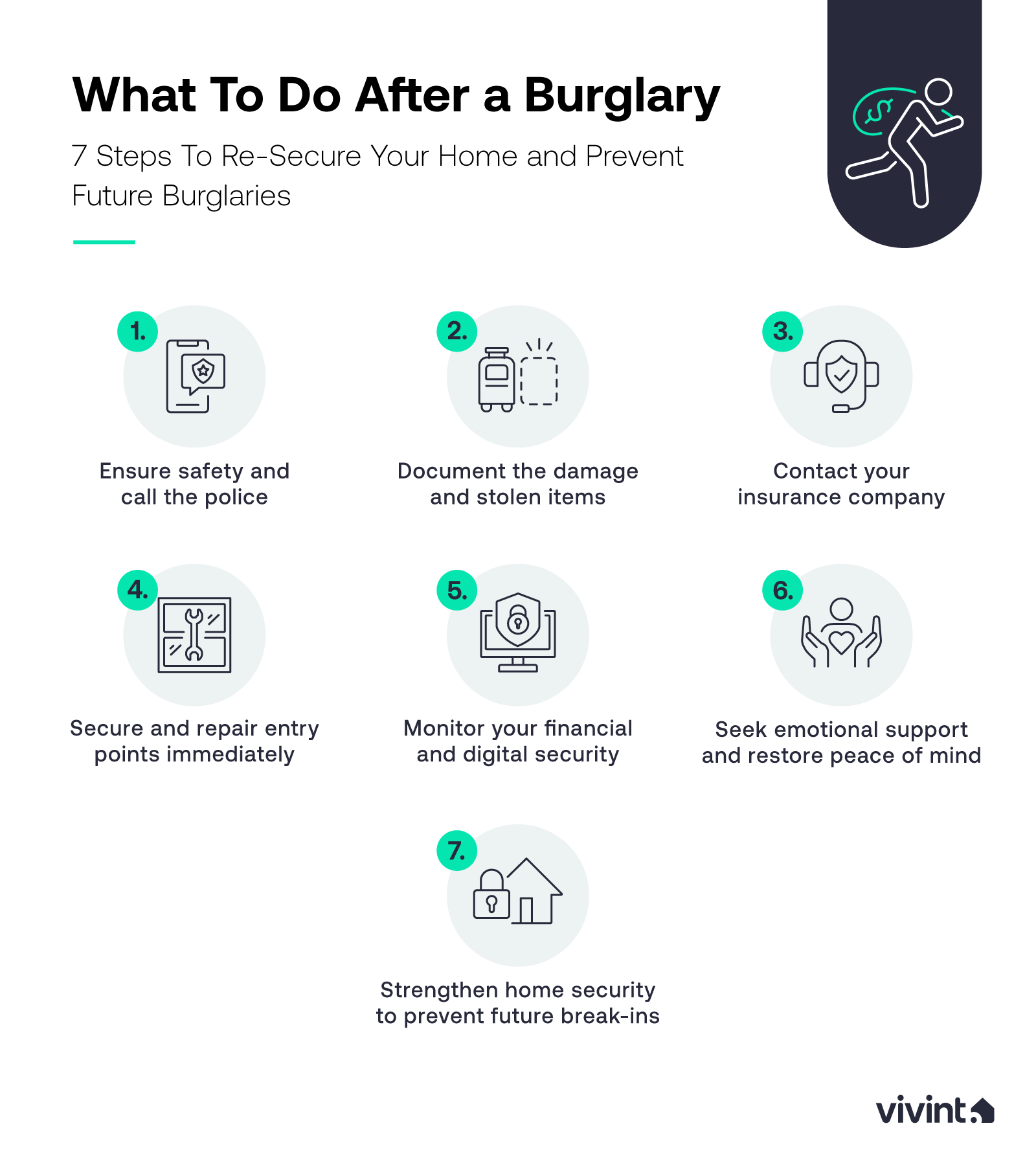
Step 1: Ensure safety and call the police
Your safety always comes first. Here is what you need to do first after a home break-in:
- If you suspect a break-in or notice signs of forced entry, do not go inside.
- Leave the area immediately and find a safe place nearby to call 911.
- Let law enforcement check the property before you re-enter.
- Once the police arrive, cooperate fully with their investigation. They will inspect the scene, file a police report, and assign a crime reference number. Both are essential for filing an insurance claim. Be sure to request a copy of the report for your records.
Step 2: Document the damage and stolen items
Thorough documentation can make a major difference when filing an insurance claim. Accurate records help validate your losses and speed up the reimbursement process.
Start by taking clear photos and videos of the damage, including:
- Entry points. Capture doors, windows, or other areas where the intruder may have entered.
- Broken windows. Focus on any shattered glass or structural damage.
- Damaged property. Photograph items that were harmed during the break-in.
- Empty spaces. Show where stolen items were taken from, especially if they were valuables like electronics or jewelry.
Next, make a detailed list of everything missing. Include descriptions, estimated values, and serial numbers if available. This inventory will be crucial when speaking to your insurance provider.
Store all documentation, both physical and digital, in a safe place. Consider backing up digital files to the cloud or an external drive in case you need to access them later.
Related article
6 Tips To Prevent Apartment Package Theft
Step 3: Contact your insurance company
Once you've documented the damage, reach out to your insurance provider right away. Prompt reporting helps move your claim forward and prevents delays.
Whether you’re covered under a homeowners or renters policy, most insurers will ask for the same basic information.
Here’s how to start the process:
- Gather your documents. Be ready to provide a copy of the police report, photos or videos of the damage, and a list of stolen items with estimated values.
- Call your insurance company. Use the claims number on your insurance policy or log into your provider’s online portal to file. Many companies have 24/7 support for emergencies.
- Clarify your coverage. Ask what your home insurance or renters policy includes. Homeowners are typically covered for both structural damage and personal property loss, while renters are covered only for their belongings.
- Track all communication. Keep a log of phone calls, emails, and claim reference numbers. This helps if you need to follow up or appeal part of the insurance claim.
If you're unsure what your policy covers, you can visit official resources like NAIC’s consumer guide to homeowners insurance or your state insurance department for more information.
Step 4: Secure and repair entry points immediately
After law enforcement has cleared the scene, your next priority is securing the home. This helps prevent additional theft and gives you and your family a sense of safety while you assess next steps.
Focus on these immediate actions:
- Reinforce the front door. If the door or lock was damaged, install a temporary lock or replace it as soon as possible.
- Board up broken windows. Use plywood or thick plastic sheeting to cover any shattered glass and keep the elements out.
- Secure all loose keys. Many homeowners leave keys around the exterior of their homes for easy access. Skilled burglars are aware of potential key locations, so ensure you locate and secure them promptly.
- Inspect all entry points. Check every door and accessible window for signs of tampering or forced entry.
- Install or upgrade deadbolts. Strong locks are one of the easiest ways to deter another break-in. Test existing ones for any weaknesses.
- Talk to your neighbors. Let them know about the incident and ask them to keep an eye on your property. Suspicious activity at a neighbor’s house could signal broader issues in the area.
These quick repairs not only make your home more secure but also signal to would-be burglars that you're paying attention and taking action.
Step 5: Monitor your financial and digital security
A home invasion doesn't always end with physical theft. Burglars may also access sensitive documents, devices, or mail that could put your financial identity at risk.
To protect your financial and digital security, here are some helpful tips:
- Contact financial institutions. Start by contacting your credit card companies and bank to report potential fraud. Let them know your home was broken into and ask about freezing or replacing your cards. Even if your wallet wasn't stolen, information like account numbers or statements may have been taken.
- Secure your online accounts. Update the passwords on your most important accounts, especially those tied to your mobile phone, smart home devices, or online banking. Enable two-factor authentication where possible for added protection.
- Monitor for suspicious activity. To stay ahead of any future misuse, consider enrolling in a credit monitoring service or setting up fraud alerts with the major credit bureaus. These tools can notify you if your information is used to open new accounts or apply for loans.
Step 6: Seek emotional support and restore peace of mind
Facing a home burglary often leaves deeper scars than just lost belongings. It’s natural to feel unsettled, vulnerable, or even angry.
Here are some effective ways to protect your mental health after a home burglary:
- Talk openly with family and loved ones. Sharing your fears and frustrations can help you feel less alone and more grounded in the months that follow.
- Seek professional support when needed. Many victims benefit from help through national or local organizations like the Office for Victims of Crime or the VictimConnect Resource Center, which offer referrals, counseling, and crisis assistance.
- Use available resources for recovery. The FBI’s Victim Services Division provides guidance through the justice system and support for emotional recovery.
- Get involved in your community. Join or help start a neighborhood watch program. Looking out for one another rebuilds trust and strengthens community bonds.
These steps won’t erase the trauma immediately, but they offer a path toward healing, connection, and renewed peace of mind.
Related article
What to Do If Your Package Is Stolen
Step 7: Strengthen home security to prevent future break-ins
Criminals tend to look for easy targets. Visible, active security systems send a clear message that your home is off-limits.
Here’s how to fortify your defenses:
- Install alarm systems that are monitored 24/7. These systems alert you and dispatch law enforcement at the first sign of trouble.
- Add security cameras. Visible surveillance not only records activity but also serves as a deterrent.
- Improve outdoor lighting. Motion‑activated or timed lights help eliminate hiding spots and expose movement.
- Adopt smart locks and strong deadbolts. Combine hardware and digital protection for doors and windows.
- Layer security measures. No single tool is enough. Alarms, cameras, lighting, and locks all work best in combination.
A professionally installed home security systems from Vivint bring you comprehensive coverage backed by 24/7 monitoring. Smart sensors, real‑time alerts, and automatic emergency response reduce the chance of successful intrusions and help restore your confidence in your home’s safety.
Your past break‑in was traumatic, but it doesn’t define your future risk.
These security measures make a meaningful difference in preventing future break-ins, helping you regain control and protect what matters most.
Help prevent future break-ins
Recovering from a home burglary takes time, but taking the right steps can restore your sense of security.
By addressing immediate needs, securing your space, and investing in smarter protection, you're actively reducing the risk of future break-ins.
Monitored home security systems offer long-term peace of mind, especially those that respond automatically and keep you informed, whether you're home or away. The more layered your protection, the more confident you’ll feel in your space again.
Get a free security consultation and see how Vivint can customize a system to protect your home and your peace of mind. Give us a call at 855.822.1220 today.
Related article
What Is Vivint? A Guide to Smarter Home Security and Automation
FAQs for what to do after a break-in
Even after you’ve taken all the right steps, questions can linger. It’s common to feel unsure about what’s next, especially when it comes to safety, insurance, and emotional recovery.
These frequently asked questions address some of the biggest concerns homeowners face after a burglary.
Will burglars come back after a first break-in?
Unfortunately, repeat break-ins can happen, especially if the home is still vulnerable.
Burglars often assume a home won’t be immediately secured, or they may believe replacement items have been purchased. That’s why upgrading your home security is so important.
Installing visible alarm systems and home security signage acts as a strong deterrent. When criminals see these warnings, they’re far more likely to move on to an easier target.
How can I feel safe again after a burglary?
Restoring your sense of security starts with reclaiming control of your environment.
Consider these strategies:
- Increase visibility around your home with lighting and trimmed landscaping.
- Upgrade to monitored home security systems for 24/7 protection and rapid emergency response.
- Join or form a neighborhood watch.
- Support groups and therapy can also help if you’re dealing with lingering anxiety or PTSD. Talking to others who’ve gone through similar experiences can be an important step toward peace of mind.
What will my home insurance cover after a break-in?
Most home insurance policies cover a combination of stolen items, damaged property, and personal liability.
For example, if a door is forced open or electronics are taken, your insurance company may reimburse the replacement cost (minus your deductible).
Coverage and limits vary depending on your insurance policy and provider, so review your documents or call your insurance company to confirm exactly what’s included.
Get a free quote today.
A Vivint Smart Home Pro will contact you within 24 hours. Or skip the form and call now: 844.481.8630.
Everything works together
Combine products
for a safer home
You may also like:
Home Security
Best Smart Home Devices for Elderly Parents: A Caregiver's Remote Setup
Oct. 02, 2026

Home Security
Smart Home for ADUs and In-Law Suites: Privacy, Access, and Security on Both Sides of the Door
Plan smart locks, cameras, alarms, and safety sensors for an accessory dwelling unit (ADU) or in-law suite without oversharing security.
Sep. 23, 2026
Home Security
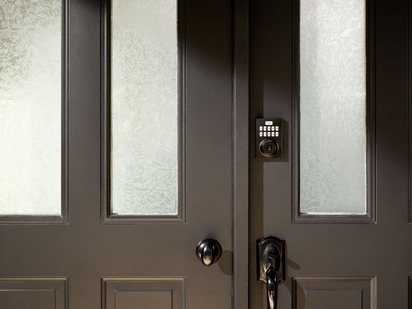
How Do Smart Locks Work?
Learn how smart locks work, how they connect to your home, and how keyless entry, remote access, and smart home integration can improve convenience and security.
Sep. 15, 2026
Related content
-
Eye-Opening Home Burglary Statistics in 2024
Unveiling eye-opening home burglary stats: Learn how burglars select targets and safeguard your home against their tactics.
-
Carbon Monoxide Detector Going Off? Here's What to Do Next
If your carbon monoxide detector goes off, act fast. Learn what to do, what causes carbon monoxide leaks, and how to keep your home safe.
-
A Comprehensive Guide to Vehicle Break-In Statistics
Motor vehicle theft is on the rise. Get the latest stats on this issue and learn how to protect yourself.


