With connected devices that adapt to your daily routines, homeowners can automatically control heating, cooling, lighting, and appliances to reduce waste and maximize energy savings. From voice-activated thermostats to energy monitoring plugs, these smart systems offer real-time insights and hands-free control that help you make smarter choices while barely lifting a finger.
This guide breaks down the most effective ways to use smart home devices to potentially lower your energy use, reduce emissions, and shrink your utility bills. Whether you're new to home automation or looking to upgrade your current setup, you'll find actionable tips to save money and improve your home's energy efficiency.
Why smart homes are key to lower energy bills
Smart homes help homeowners cut energy waste and improve efficiency by using automation, data, and connectivity to control how and when energy is used. These systems adapt to your routine and optimize consumption without sacrificing comfort.
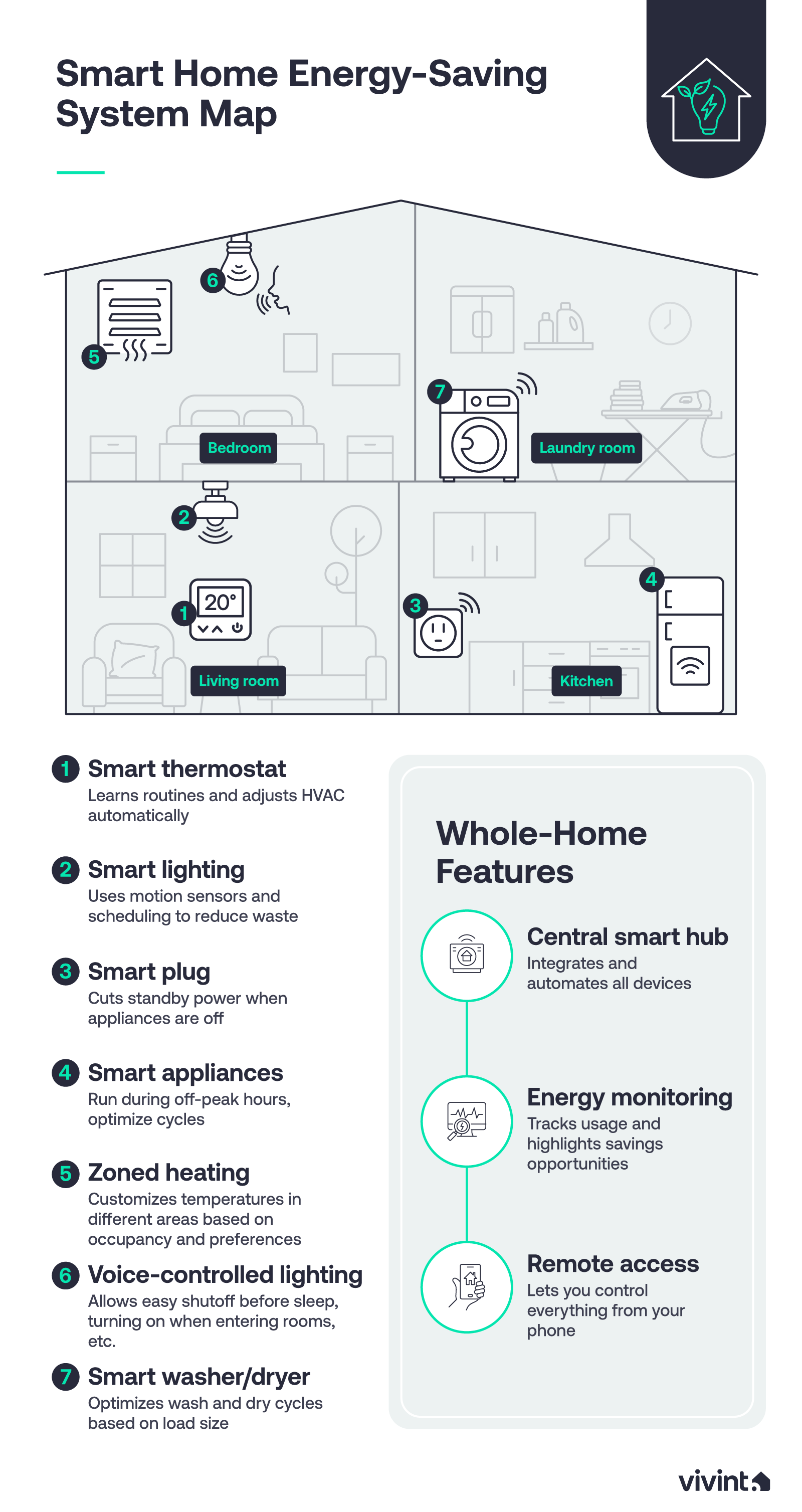
Here’s how smart home tech supports lower energy bills:
- Real-time monitoring. See how much energy your home is using and identify what’s driving up your bills.
- Automated routines. Smart devices adjust lighting, HVAC, and appliance settings based on your schedule or occupancy.
- Remote control. Manage devices from anywhere, whether you’re at work or on vacation.
- System integration. Centralized platforms like the Vivint Smart Hub allow different smart devices to work together for streamlined energy management.
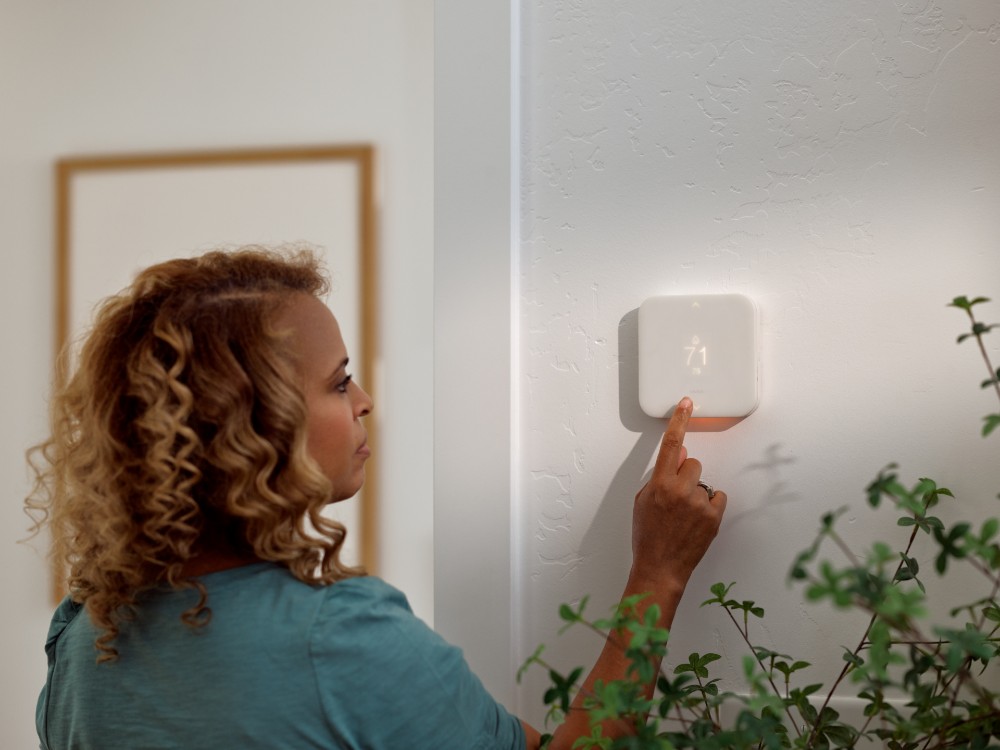
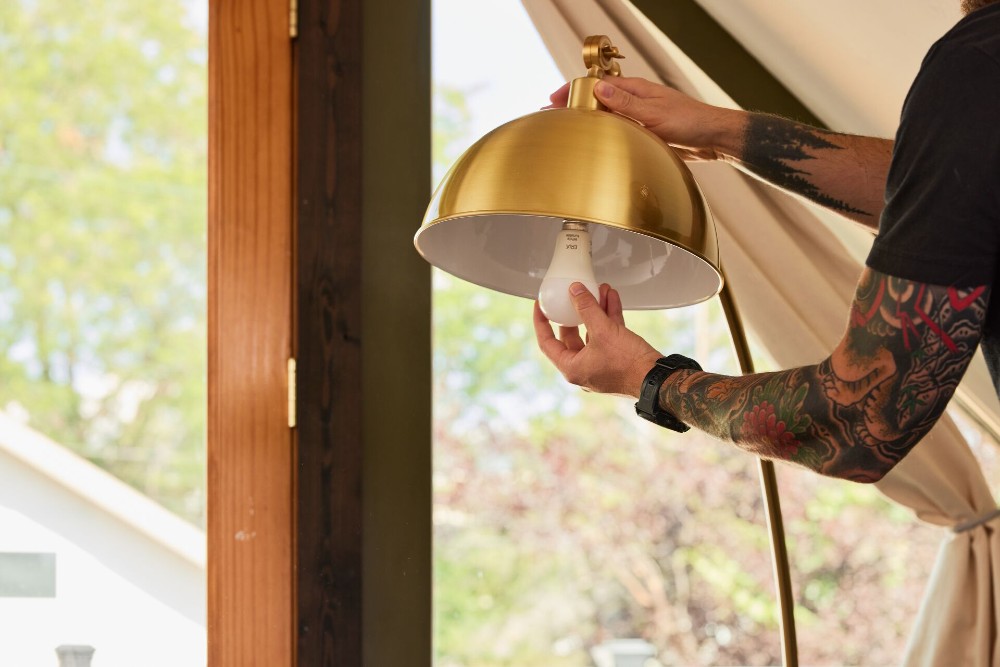
- Better home efficiency. Devices like smart thermostats and lighting systems reduce unnecessary usage and energy waste.
With these capabilities, a smart home offers a powerful way to boost energy efficiency, reduce emissions, and save on energy bills.