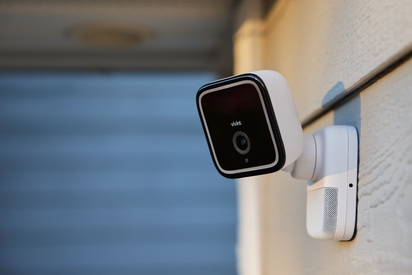
The Outdoor Camera Pro 3 takes smart features and functionality to the next level with powerful upgrades that protect your home and vehicle more accurately than ever.
The Holiday Package Theft Report 2025
Key takeaways
- 15% of Americans experienced package theft in the past year—a 36% increase from the previous year, when 11% had their packages stolen.
- The average value of stolen packages was $268, double the amount of last year ($134).
- 39% of those who faced package theft said it happened during Black Friday.
- Over half said that package theft impacted their ability to give holiday gifts: 28% had to give gifts late, and 27% were unable to give gifts.
- Those who replaced stolen gifts spent an average of $114 doing so, and 18% couldn't afford to replace stolen gifts.
- 13% of Americans admit to feeling addicted to tracking their packages.
As holiday shopping ramps up, so does the risk of porch piracy, and the impact can go far beyond a missing package. In this year's reboot of our Holiday Package Theft Report, we surveyed 1,000 Americans to understand just how widespread package theft has become during peak sales events.
We uncovered not only a spike in stolen deliveries, but also the emotional and financial toll it takes on gift-givers. From missed holidays to mounting stress, here's what we learned about package theft in the past year, and how people are fighting back.
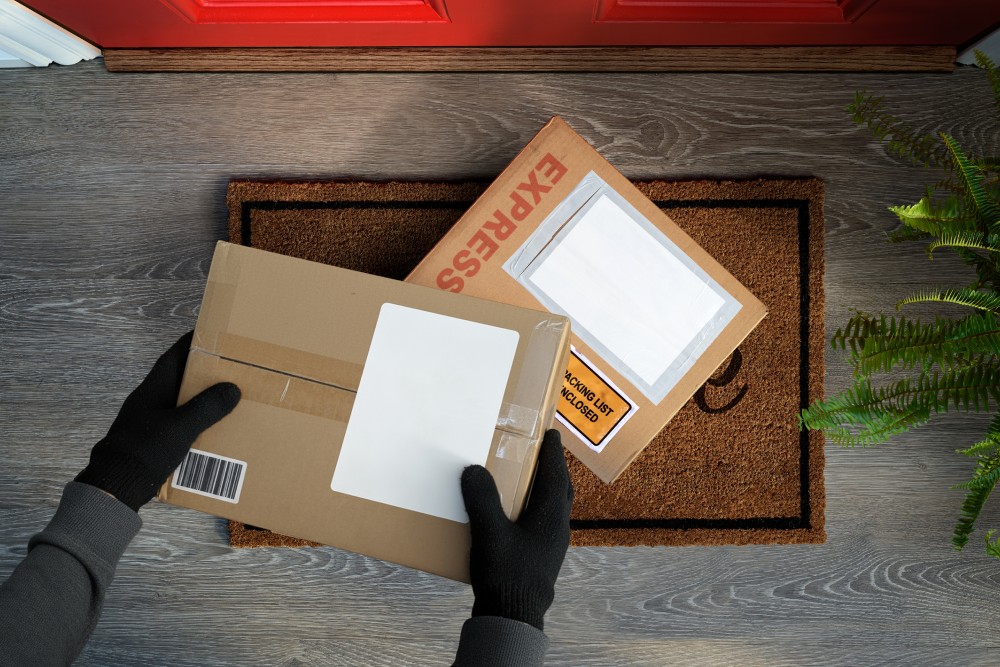
Theft peaks during Black Friday, hurting holiday gift-giving
Holiday cheer can quickly turn to frustration when gifts vanish before they can make it inside. The frequency and cost of package theft have both surged this year.
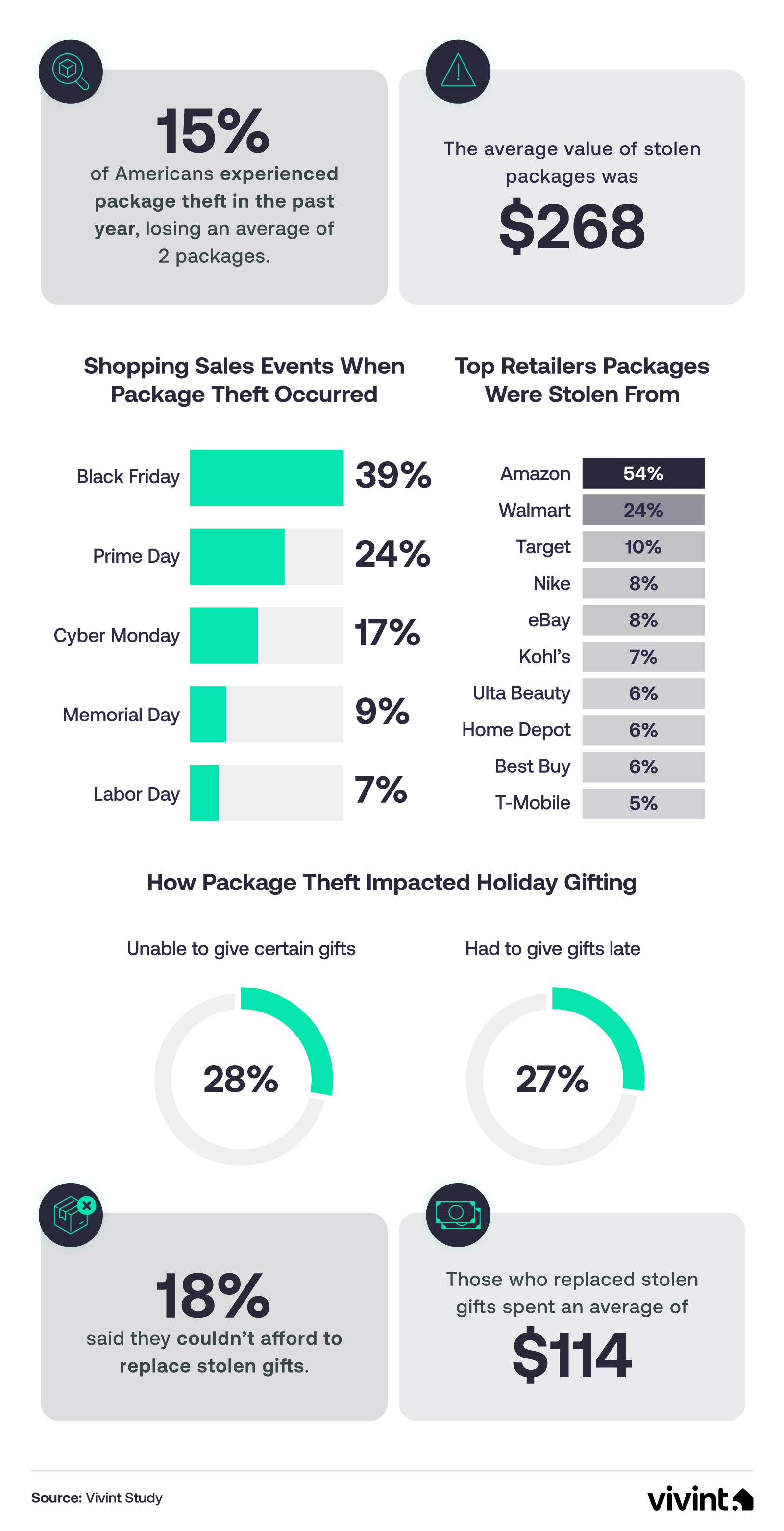
Fifteen percent of Americans said they experienced package theft in the past year, up from 11% in the previous year. Even more striking, the average value of stolen packages doubled to $268, compared to $134 last year. Black Friday proved to be the riskiest shopping day, with 39% of reported thefts occurring during that period, a noticeable jump from 28% the year before.
These thefts not only cost money but also disrupted holiday traditions. Over half of respondents (54%) said package theft affected their ability to give gifts, with 28% having to deliver gifts late and 27% being unable to give a holiday gift at all. For those who chose to replace stolen items, the average replacement cost was $114, nearly twice what shoppers paid last year. Sadly, 18% said they simply couldn't afford to replace what was lost.
Beyond money: The emotional toll of stolen packages
Porch piracy has consequences that go beyond a missing box on the doorstep. For many, it left a lasting impression on their relationships and holiday spirit.
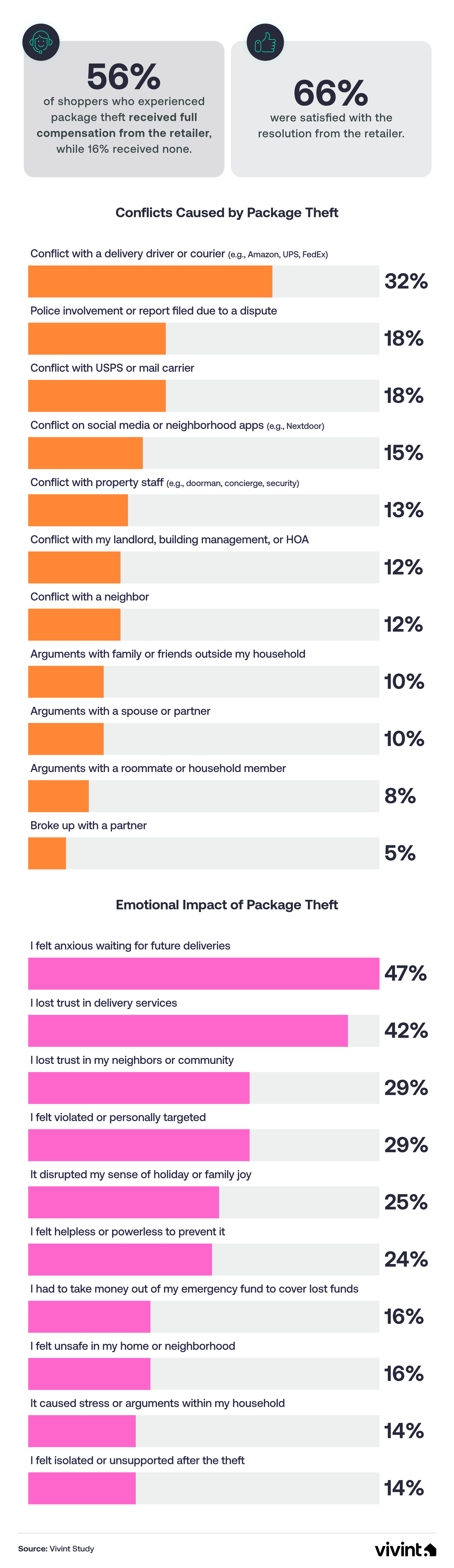
One in four Americans said that experiencing package theft disrupted their sense of holiday joy. Others dealt with even more personal fallout, with 5% saying package theft led to a breakup with their partner due to stress or conflict.
Even when the financial side was taken care of, the emotional effects lingered. Nearly half of the respondents (47%) reported persistent anxiety about future deliveries, while 42% said package theft eroded their trust in delivery services. While two-thirds (66%) were satisfied with how retailers managed their claims, these episodes clearly damaged holiday optimism and peace of mind.
How Americans are protecting their packages
With more packages arriving at homes than ever before, shoppers are getting creative—and a little obsessed—when it comes to keeping them safe.
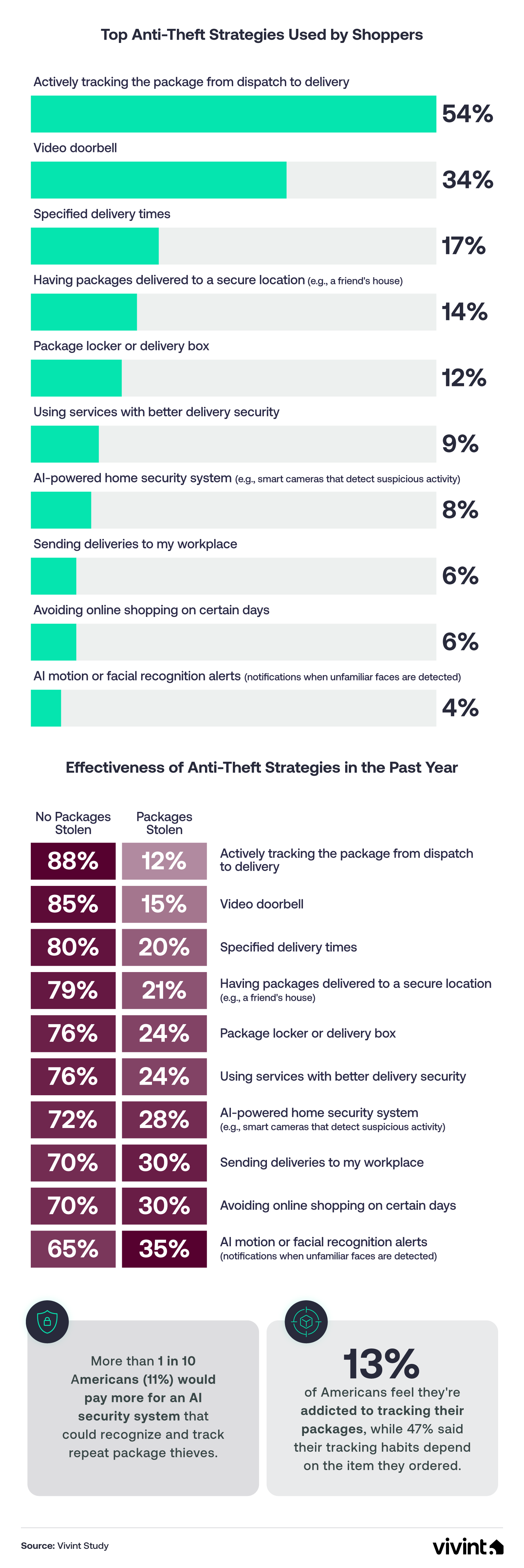
More than half of Americans (54%) now actively track their packages from dispatch to delivery as a way to prevent theft. Thirteen percent admitted they feel addicted to tracking updates, highlighting just how much stress delivery security now causes.
People are turning to smart devices as a way to take control of their deliveries. One in three (34%) said they use a video doorbell to deter porch pirates, making it one of the most common security strategies. The future of theft prevention may become even smarter, as 11% said they'd be willing to pay extra for an AI-powered system that identifies and tracks repeat offenders.
A growing problem in need of smart solutions
Package theft is on the rise again, with more Americans affected this year than last. The financial losses are higher, and the emotional impact, missed gifts, broken trust, and even relationship strain, are increasingly hard to ignore. Compared to our previous Holiday Package Theft Report, both the number of incidents and the average value of stolen goods have doubled.
Fortunately, consumers are adapting, using tools like tracking apps and video doorbells to defend against porch piracy. As the holidays approach, now is the time to take proactive steps to protect your deliveries and safeguard your holiday experience. Investing in smart home security not only offers convenience and peace of mind, but also empowers you to reclaim the joy of the season, uninterrupted.
Methodology
Vivint surveyed 1,000 Americans in 2025 to assess experiences with package theft during peak holiday shopping periods. The sample included individuals across generations and geographic regions. Of those surveyed, 15% reported experiencing package theft in the past year. Results reflect self-reported data and may be subject to response bias.
Fair use statement
We welcome the use of this information for noncommercial purposes. If you share our findings, please include a link to this page to credit Vivint and provide access to the full report.
Get a free quote today.
A Vivint Smart Home Pro will contact you within 24 hours. Or skip the form and call now: 844.481.8630.
Everything works together
Combine products
for a safer home
You may also like:
Security Cameras
Vivint Outdoor Camera Pro: Meet the Smartest Outdoor Camera on the Market
Feb. 04, 2026

Smart Guides
The Vivint Buying Guide: What's Included, Average Cost, and How to Buy
Interested in a Vivint Smart Home system but still have some questions? We've got answers for the most frequently asked questions about our security systems.
Nov. 07, 2019

Home & Family
10 Things You Probably Didn’t Know About Vivint
Vivint Smart Home is the number one smart home service provider in North America, and enhances the lives of children with intellectual disabilities through Vivint Gives Back.
Feb. 02, 2018
Related content
-
State-of-the-Art Holiday Package Protection
‘Tis the season for an increase in online shopping, package deliveries, and consequently, a spike in package theft. Protect your home with Vivint.
-
Holiday Package Theft Report
Learn how package theft affects holiday shoppers, from gift replacement costs to theft-prevention strategies.
-
Spookiest Cities Report 2025
From ghost sightings to haunted houses, find out which U.S. locations top the list of the spookiest places in 2025.


