
Plan smart locks, cameras, alarms, and safety sensors for an accessory dwelling unit (ADU) or in-law suite without oversharing security.
How to Choose the Best Emergency Pendant
Key takeaways
- An emergency pendant is a wearable device that connects seniors to emergency help with the press of a button
- Decide between wearable devices (portable) or at-home systems (stationary)
- Consider whether 24/7 professional monitoring (typically starting at $30/month) fits your needs
- Match the device to the user's lifestyle. Active adults or adults who live alone benefit most from wearable pendants.
For the aging population, there really is no place like home—nearly 80% of adults over the age of 65 would prefer to remain in their homes as they age.
But aging in place is not without risks. For seniors, risks like mobility issues, medications that cause drowsiness and other side effects, and the potential for falls can actually make staying at home dangerous.
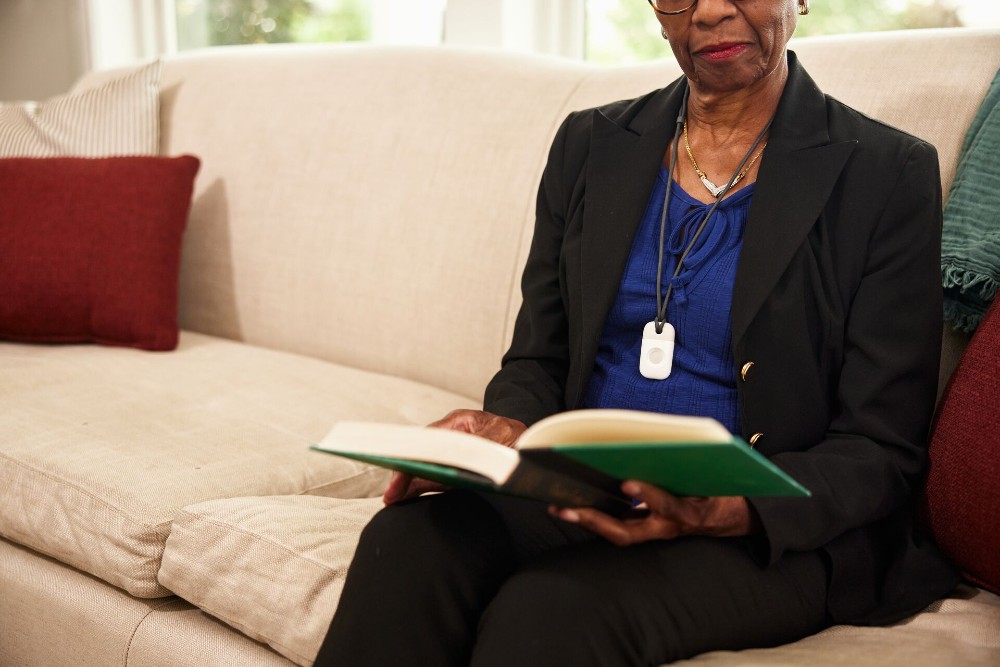
That’s where senior alert systems come in. These small, wearable devices provide seniors with a way to get help in the event of an emergency. That’s why Vivint is helping seniors stay safe in their own homes through deals like complimentary panic pendants for seniors age 75+.
Key features to look for
When choosing an emergency pendant, prioritize these features:
- Panic button: A one-touch callout for emergency help
- Water resistance: For if the user will be wearing the pendant in the shower or bath
- Battery life: The longer the battery life, the less you have to recharge
- Monitoring service: 24/7 professional monitoring brings peace of mind and additional help
Alert pendant deals for seniors
At Vivint, we care deeply about senior safety and well-being. That’s why we offer free a Vivint panic pendant to customers aged 75+ who purchase a qualifying Vivint system.* This pendant is provided at no additional cost for new customers, and existing customers can request a pendant be sent to them at no cost.
Is a panic pendant the right choice for your or your aging loved one? Read on to find out how they work and why they may be a good choice for your family.
What are alert devices?
First, it’s important to note that alert devices go by many names, including emergency pendants, panic alert systems, mobile alert systems, fall alert devices, life alert systems, and emergency response devices, to name a few. Regardless of the name, these devices all function in similar ways.
An alert device is a small, wearable, wireless device that connects the wearer to help in the event of an emergency at home. These devices typically come in the form of a pendant, smartwatch, wristband or clip-on device that can be worn around the neck on a lanyard, on the wrist, or attached to clothing.
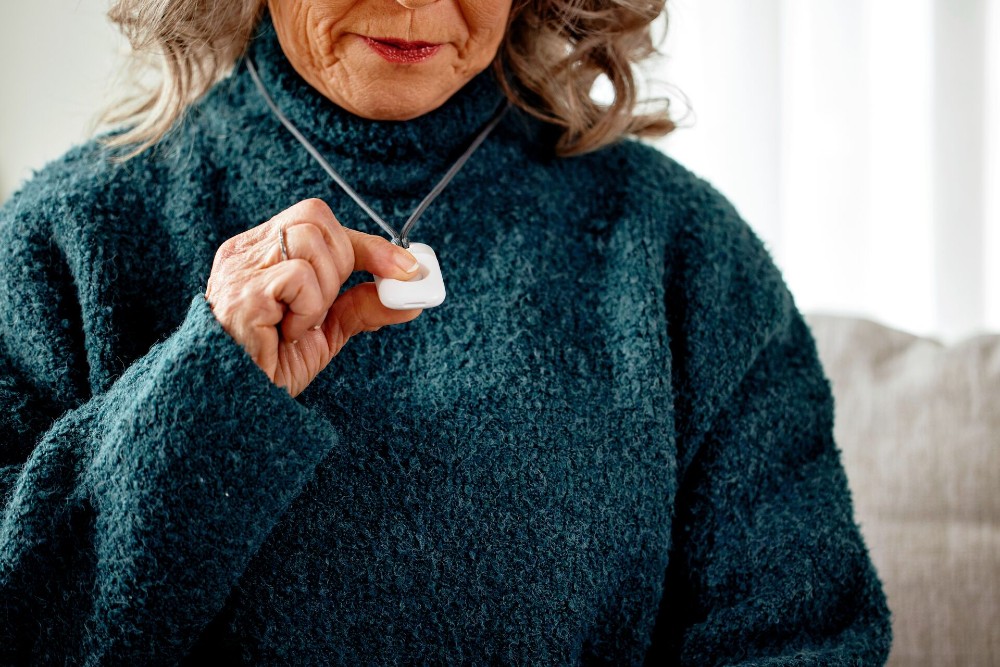
Panic pendants are equipped with a help button. When the wearer presses the button, they are connected to the monitoring center, caregiver, or emergency services, depending on the service. Many are also equipped with GPS location services. This ensures the person wearing the device gets the help they need, even if they are unable to communicate or get to a phone to call for help.
This type of device is often included as an add-on for a home security system that is also equipped with professional monitoring. Most panic pendants require a monthly fee (typically starting at $30 per month) for the 24/7 monitoring provided.
Related article
Why All Seniors Need an Alert System
How do senior alert systems work?
Senior alert pendants work by providing a one-touch line of communication from the pendant or base unit to the monitoring center. These devices are typically powered by wi-fi with cell service backup, ensuring there is a connection even if wi-fi is down.
In the event of an emergency, such as a fall, the person presses the alert button (or help button) and a signal is sent to the professional monitoring center. From there, the monitoring center representative will assess the situation and help with next steps.
While each company may differ slightly, for the most part, panic pendants work like this:
- In an emergency, the user holds down the emergency call button for several seconds, alerting the monitoring center
- The monitoring center will attempt to contact you or your emergency contact to ensure there was no false alarm and see if you need help
- The dispatcher will contact emergency services on your behalf, even if you are unable to speak or your contact is unsure of the situation
- First responders will go to your home and assess the situation
Types of senior alert systems
There are two main types of senior alert systems—wearable, mobile systems and at-home systems. Although each functions similarly (one-touch access to help), they differ slightly.
Wearable vs. at-home alert system comparison
| Feature | Wearable Alert Devices | At-Home Alert Systems |
|---|---|---|
| Portability | Works anywhere with cellular coverage | Limited to home range (typically 33–600 ft from base) |
| Key features | GPS tracking, fall detection, water resistance, heart rate monitoring | Two-way speaker, integrates with home security system |
| Ideal use cases | Active seniors who spend time away from the house, frequent travelers | Seniors who spend most time at home, those who live alone |
| Limitations | Must remember to wear the device when leaving the home | No protection outside the home |
Wearable alert devices
Wearable alert devices include:
- Smartwatches that include features like water resistance and step tracking as well as a panic button
- Panic pendants worn on a lanyard, necklace, or bracelet
These devices come with different features and price points. The most basic models will include a panic button and GPS tracking (location tracking), while others may include advanced features like heart rate monitoring or optional fall detection. As a general rule, wearable devices provide the most comprehensive protection, since they are worn directly by the user.
At-home alert systems
In addition to mobile systems for emergency help, some security systems also have in-home emergency response systems. The Vivint Smart Hub, for example, is the system’s base unit that includes one-touch emergency buttons and a two-way speaker that allows people at home to reach the Vivint monitoring center with the touch of a button.
From there, the monitoring center agent will speak to you via the Vivint Smart Hub or call your emergency contact’s mobile device.
Because cell phones aren’t always within reach and mobile devices can sometimes lose battery life if they don’t remain charged, a system like Vivint that includes a stationary Smart Hub provides an extra layer of protection.
Related article
Essential Questions to Ask Your Parents as They Age
Who are panic pendants for?
Panic pendants offer potentially life-saving help for anyone who wants real-time, on-the-go access to emergency assistance.
A panic pendant is particularly useful for seniors, who may be more susceptible to falling. While people of all ages trip and fall, a fall can be deadly for seniors—in fact, falls are the leading cause of both fatal and nonfatal injuries in older adults.
Falls are more dangerous for seniors due to the changes that happen in the body as we age. Bone and muscle loss increases with age, making it more likely that a fall will result in a fracture.
Emergency pendant devices are particularly important for seniors who:
- Live alone. Seniors who live alone or do not have a caregiver and fall may not be able to get to the phone themselves and get the help they need.
- Have a greater risk of falling. Older adults who have failing eyesight, are unable to maintain their balance, or walk with an unsteady gait are just a few examples of people who are at a greater risk of falling.
- Have a history of falls. Those who have a history of falling or are susceptible to fall injury could benefit from an alert device.
- Take medication. Over 90% of adults aged 75 and older take at least one prescription medication. Many medications have side effects that include drowsiness or dizziness, increasing the risk of falls.
In addition to falls, panic buttons also assist seniors in other situations, like where fire or carbon monoxide are present in the home. When part of a home security system, panic buttons can also be used to call for help if there is an emergency like smoke, carbon monoxide, or even a break-in.
In addition to seniors, anyone with limited mobility or those with conditions that can lead to falls—such as a history of seizures, low blood pressure, or fainting—could benefit from the real-time monitoring and help an emergency device can provide.
When to consider alternative solutions
Emergency pendants may not be the right fit for everyone. Consider an alternative solution if:
- Cognitive impairment is present. Seniors with dementia or Alzheimer's may forget to wear panic devices or how to use them. Automatic fall detection or caregiver-monitored systems may be more appropriate.
- Manual dexterity is limited. Individuals with severe arthritis or hand tremors may struggle to press small buttons. Voice-activated systems or automatic fall detection devices may be better options
- The user refuses to wear devices. Some seniors resist wearing pendants.
Benefits of panic pendants
There are many benefits to panic pendants for older adults and their loved ones, including:
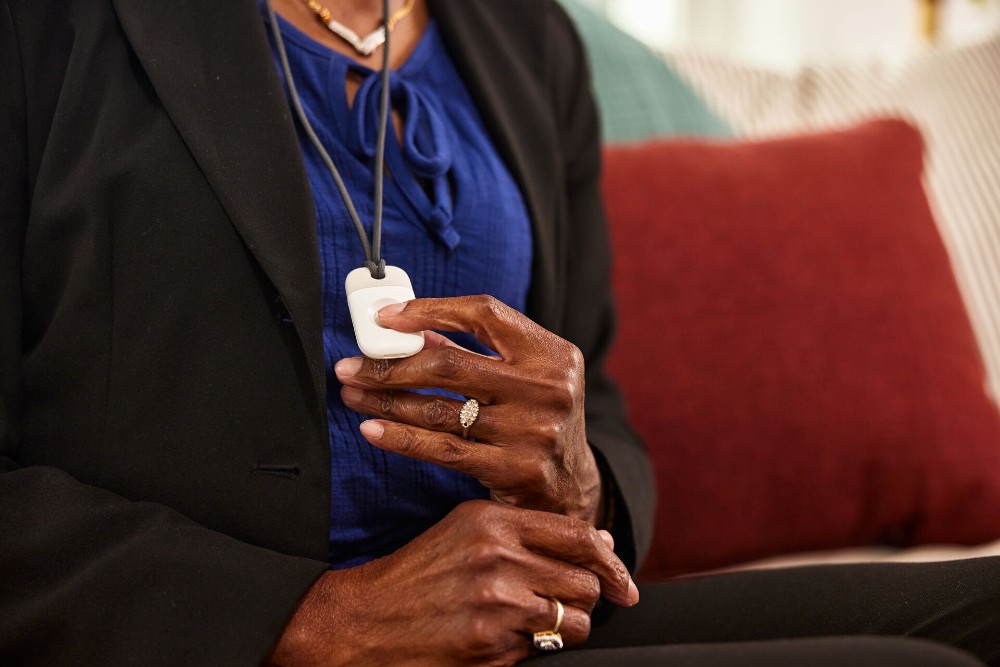
- Peace of mind. Knowing your loved one can get the help they need with the touch of a button puts family members at ease.
- Greater independence. Nearly 80% of adults would like to remain in their homes as they age.
- Help in an emergency. In an emergency, every second counts. If a loved one falls or is unable to get to the phone in an emergency, a fast response time from their senior alert pendant can be a literal lifesaver.
- Keeps family members informed. Some companies also inform emergency contacts when an alert from the device is detected. Designated loved ones or caregivers may receive a text message so they can act quickly.
- Compact design. The compact design of a panic pendant makes it easy for anyone to carry or wear.

Peace of mind—and savings—with Vivint senior systems
Vivint senior alert systems help provide you or your loved ones with peace of mind, protection, and backup support when you need it. (See what our customers are saying about their alert systems here.)
With a senior alert system from Vivint, the press of a button will provide seniors with:
- Fast, reliable connection to help in the event of an emergency
- An industry-leading response time that averages less than 10 seconds
- Convenience—wear around your wrist, a lanyard, clip to clothing, or use the Smart Hub for one-touch callouts
Not only that, but Vivint includes a senior alert system free of charge for all customers 75 and older who purchase a qualifying Vivint system*.
A senior alert pendant from Vivint can help you or your loved one enjoy independence and peace of mind. Contact Vivint at 855.822.1220 today at to get started.
Frequently asked emergency pendant questions
Still have questions about emergency pendants? Learn more here.
What is an emergency pendant?
An emergency pendant is a small, wearable device (typically worn around the neck or wrist) that allows the user to call for help by pressing a button. The device connects to a 24/7 monitoring center than can dispatch emergency services or contract designated caregivers.
How much do senior alert systems cost?
Senior alert systems typically start at $30/month for monitoring, plus equipment costs of $0–$350 depending on the provider and features. Some companies like Vivint offer free pendants for qualifying customers aged 75+.*
Do emergency pendants require a monthly fee?
Most emergency pendants require a monthly monitoring fee (typically starting at $30/month) for 24/7 professional monitoring services.
*Qualifying system purchase requires minimum $599.99 equipment purchase, minimum $39.99/month services agreement and professional installation. Reactivations of previously-installed systems not eligible for offer. Offer is for customers 75 years of age or older and may not be available in all states or provinces. Equipment purchase may be financed separately subject to an agreement with one of Vivint’s third-party financing partners. Well-qualified customers may finance equipment purchase at 0% APR for up to 60 months. Month-to-month service agreement available when equipment is purchased up front. Without a Vivint services plan, product and system functionality is limited (including loss of remote connectivity for the alert pendant). Monthly $1.48 cellular network maintenance fee applies. Taxes and local permit fees may apply. Speak to a Vivint representative for complete equipment, services, and package details, including pricing and financing details. Products and services in Louisiana provided by Vivint Louisiana Commercial Certificate #58280. See Vivint license numbers here.
Get a free quote today.
A Vivint Smart Home Pro will contact you within 24 hours. Or skip the form and call now: 844.481.8630.
Everything works together
Combine products
for a safer home
You may also like:
Home Security
Smart Home for ADUs and In-Law Suites: Privacy, Access, and Security on Both Sides of the Door
Sep. 23, 2026
Home Security
How Do Smart Locks Work?
Learn how smart locks work, how they connect to your home, and how keyless entry, remote access, and smart home integration can improve convenience and security.
Sep. 15, 2026
Home Security
10 Advantages of Smart Locks
Smart locks allow you to lock and unlock your door remotely with your smartphone, providing convenient keyless entry to your home.
Sep. 14, 2026
Related content
-
Why All Seniors Need an Alert System
Aging in place doesn’t have to be dangerous. With the Vivint Emergency Pendant, help is just one push of a button away.
-
Vivint Senior Alert System Reviews
With Vivint Medical Alert Systems, you can get help in an emergency with the push of a button.
-
Vivint Emergency Pendant
The Vivint Emergency Pendant makes it easy to alert Vivint Monitoring and is complimentary for people 75+ years of age. Call (844) 883-1324 to Learn More!


