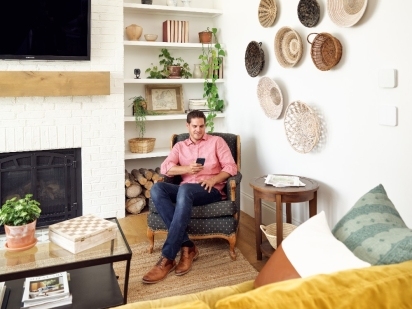
These tips will show you how to protect your home from cyberattacks during Cybersecurity Awareness Month.
The New Homeowner's Security Checklist: What To Do the First 48 Hours in Your House
Key takeaways
- Your first 48 hours have a clear priority order: locks, codes, breakers and shutoffs, smoke and CO detectors, and entry points.
- Rekey or replace every exterior lock the day the house is yours. You don't know how many copies of the old keys are out there.
- Test every smoke and CO detector on day 1, not next month. The NFPA recommends a test every month after that.
- The homeowners insurance discount you'll claim later (2%–15% withmost carriers) starts with the Certificate of Installation you collect in your first month.
- The printable 48-hour checklist below keeps the priority order in your hands during a chaotic move-in week.
You signed the papers, got the keys, and stood in an empty room hearing the echo. Then the moving truck pulled up. From this point on, a hundred things compete for your attention, and a few of them are genuinely time-sensitive.
This is the order to tackle your tasks post-move. The first 48 hours have a tight priority list, and most of it has to do with locking the house down before you've even unpacked. The next two to four weeks fill in the rest: detectors, sensors, smart-home integration, and the paperwork that earns you a homeowners insurance discount on your next renewal.
In this guide, you'll find a day 1/week 1/month 1 plan, a "what to buy first" table that ranks every item by risk (the highest-likelihood threat your money should address first), targeted safety tips for households with older adults or young children, and a printable PDF version of the full checklist you can keep on the fridge (even if the boxes are still everywhere).
What's included in a 48-hour home security checklist?
Before you unpack, get these six things done:
 1. Rekey or replace every exterior lock
|
 2. Reset every garage and gate code
|
 3. Locate the breaker, water main shutoff, and gas shutoff
|
 4. Test every smoke and carbon monoxide detector
|
 5. Walk every entry point and mark sensor placements
|
 6. Save your local emergency numbers on your cell phone
|
Day 1 setup: Locks, codes, and entry control
Locks are the most exposed part of a new home. The previous owner, the seller's agent, the cleaning crew, the contractor, and anyone they handed a key to all had access until you change it. Two ways to update your locks are:
 Same locks, new key. A locksmith pulls the cylinder and resets the pins so old keys no longer work. |
 Unique entry codes for the housekeeper, the dog walker, and visiting family, plus the ability to revoke any code from your phone. Vivint installs Kwikset smart locks that integrate with the security system, so unlocking the front door can also disarm the alarm. |
Whichever path you take, change the garage door opener code on the same day. Most modern openers reset through the keypad on the unit. While you're in the garage, check the side door, since most new homeowners forget there is one.
Rekey vs replace vs get smart locks
| Option | Typical Cost | Time Commitment | Security Level |
|---|---|---|---|
| Rekey | $50–$150 | Under 1 hour | Good: Invalidates old keys |
| Replace locks | $100–$300+ | 1–2 hours | Better: New hardware + new keys |
| Smart lock | $150–$400+ | 1–2 hours | Best: Revocable codes, remote access, security system integration |
Bottom line: On day 1, your biggest security job is controlling who can get in. Change every lock and code before you sleep in the house.

Download your free smart home guide.
Learn everything you need to know about the value and security of a smart home in one quick, easy read.
Week 1 setup: Detectors, sensors, and the emergency basics
By the end of your first week, every detector and sensor should be tested and placed.
 One on every floor, one inside or outside every sleeping area. Test monthly per NFPA guidance. If you find a detector with no date stamp, replace it. Standard alarms last about ten years. |
 One in the kitchen (mounted, not under the sink), one in the garage, and one within reach of bedrooms. Fastest first response to a small fire. Check the pressure gauge before storing. |
 Every exterior door and ground-floor window first, then motion and glass-break in master bedroom and home office. Cover the obvious entry points, then the rooms a thief would head to. Vivint includes these sensors as standard in its starter packages. |
 Under the kitchen sink, near the water heater, near the washing machine. A small leak caught early prevents the kind of insurance claim that shows up on every renewal for the next five years. |
 Centrally located; print the numbers list on the inside of a kitchen cabinet door. Build a real kit (not the gas-station bandage box). |
Bottom line: By the end of week 1, every life-safety detector should be tested, and every entry point should be covered by a sensor.
Related article
Packing Tips for a Successful Move
Month 1 setup: Smart home integration and pro monitoring
The first month is when the security system goes live and the smart-home layer comes in. By this point, you know where everyone in the household goes during the day, and the install can be tuned to those patterns.
 Lower utility bills; pairs with the security app so you control everything from one place. You've lived in the house long enough to know the rhythm. Set schedules around real life, not guesses. |
 at the front, an outdoor security camera covering the driveway, and an indoor camera in the main living area. A doorbell camera handles most "who's at the door" moments without you getting up. Outdoor coverage acts as a visual deterrent. |
 A central station verifies alarms and dispatches emergency services. Vivint's [monitoring service](https://www.vivint.com/products/monitoring) starts at $24.99 a month, at the low end of the typical [$20–$80](https://www.nerdwallet.com/home-ownership/home-security/learn/how-much-does-a-home-security-system-cost) industry range for professional monitoring. |
 One in-home appointment; the technician installs and tests every device, then walks you through the app before leaving. [Vivint's pro install](https://www.vivint.com/professional-security-system-installation) comes with $0 activation for new customers. |
Bottom line: By month 1, aim to have a professionally installed security system with monitoring that integrates with your smart home devices.
What to buy first: a home safety checklist ranked by risk
Spending priority for the first month, ranked by what protects you against the highest-likelihood event:
| Priority | Item | Why It's First |
|---|---|---|
| 1 | Lock rekey or smart lock install | Removes unknown keyholders the moment you take possession |
| 2 | Smoke and CO detector test + fresh batteries | Fire is the highest-stakes home risk; existing detectors may be expired |
| 3 | Fire extinguisher (kitchen + garage) | Fastest first response to a small fire |
| 4 | Door, window, and motion sensors | Cover the most likely break-in entry points (Vivint includes these as standard) |
| 5 | Water leak sensors | A small leak caught early can also earn ~3% off your homeowners premium |
| 6 | Indoor and outdoor cameras | Visual deterrent + post-incident evidence |
| 7 | Smart thermostat | Energy savings; bonus integration with the security app |
Special considerations for older adults and young children
If anyone in your household is over 65 or under 6, a few extra items belong on your first-month checklist. Both groups have higher injury rates from things a typical adult never thinks about.
For older adults
About 1 in 4 adults age 65 and older fall each year, according to the CDC. Most of these fixes target tripping hazards and reach issues, and most are inexpensive:
 Mount into a stud, not into drywall. Place inside the shower and next to the toilet. |
 Both sides of the staircase, if it's wide. Add light switches at the top and bottom of every staircase, so no one starts down in the dark. |
 Replace any wobbly or worn step stool. Most kitchen reach injuries come from improvised stools or chairs. |
 Throw rugs are the biggest indoor tripping hazards; secure or remove them. |
 Prevents scalding from hot water at the tap. |
 Auto-on motion lights work even better than plug-ins. |
For young children
Safe Kids Worldwide publishes a standard checklist. The most-missed items in a new home are:
 On every cabinet that holds cleaning products, medications, or sharp tools. Add a toilet seat latch in the main bathroom for toddlers. |
 Window guards on every above-ground floor keep curious climbers safely inside. Replace looped window coverings (corded blinds and shades) with cordless options. |
 Electrical cords, extension cords, hair dryer and curling iron cords. Children pull what dangles. |
 Of children under three. Includes dry-cleaning bags, grocery bags, and trash liners. |
 Pot handles turned inward, so a curious toddler can't reach them. |
 Anchor any furniture taller than the crib rail to the wall. |
Start tonight
Pick one item from this list before you call it a night. Even rekeying the front door counts as a win. The first action is the hardest, and once you've done one, the rest of the checklist starts to feel like momentum instead of a chore. By month 2, you'll stop wondering whether the system is set up correctly because it just is.
If you want a pro to handle the full security install before the boxes are unpacked, grab Vivint's move-in options and lock in free professional installation with $0 activation for new customers. Give us a call at 855.822.1220 today.
Related article
Alarm Monitoring Costs
Frequently asked questions about the new homeowner security checklist
A handful of questions come up over and over with new homeowners. Here's what to know.
How soon should I install a security system in a new house?
The first 48 hours, ideally; at minimum, the first week. The risk window is highest right after move-in because keys, codes, and access permissions are at their least controlled. A monitored security system installed early signals to anyone watching that the home is no longer an easy target. If the timing of a pro install is going to slip past the first week, rekey the locks, reset every code, and put up door and window sensors as a stopgap.
Should I rekey or replace the locks?
Rekeying is fine for older but solid hardware: a locksmith pulls the cylinder and rekeys it for a new key, usually in under an hour. Replace the locks (or upgrade to smart locks) if the existing hardware is rusted, loose, or older than the home's last major renovation. Smart locks add real day-to-day value (revocable codes for caregivers, contractors, and family) and integrate with a Vivint security system, so unlocking the door can disarm the alarm.
What goes on a 48-hour home safety checklist?
Six things: rekey or replace exterior locks, reset every garage and gate code, locate the breaker and water and gas shutoffs, test every smoke and CO detector, walk every entry point and mark sensor placements, and save your local emergency numbers in your phone. Everything else can wait until week 1.
Get a free quote today.
A Vivint Smart Home Pro will contact you within 24 hours. Or skip the form and call now: 844.481.8630.
Everything works together
Combine products
for a safer home
You may also like:
Home & Family
Top Ways to Protect Your Smart Home From Cyberattacks

Home & Family
Spookiest Cities Report 2026
Discover America's spookiest cities of 2026, from reported ghost sightings and haunted places to a 315% rise in haunted hotel searches.
Smart Guides
Try the Vivint Smart Home App with Our Interactive Demo
Related content
-
The Basic Home Security Checklist Every Home Needs
Keep your home safe while you’re on the go. Check out our simple, easy-to-follow home security checklist to make sure your home is always locked up tight.
-
20 Essential Things Every Homeowner Should Know About Their Home
This home maintenance list will help homeowners know what they need to know to keep their homes safe and worry-free for years to come.
-
A Home Security Checklist to Secure Your Home
Home break-ins and burglaries can happen to any homeowner. See our checklist to keep your home secure from intruders.


