
Discover how door sensors work and why they’re essential for securing your home. Learn about the different types, features, and benefits of door sensors.
How Do Window Sensors Work?
Key takeaways
- Window sensors are two-part devices (reed switch + magnet) that detect when a window is opened and trigger an alarm
- Window sensors do not detect broken glass, so pair them with a glass break sensor for complete protection
- Installation is simple and involves placing the magnet on the window and the sensor on the frame
- Window sensors work with your security system to alert you and a monitoring center of potential break-ins
- Window sensors may also be compatible for use on doors, cabinets, and more for versatile home monitoring
When it comes to break-ins, the overwhelming majority of burglars break in through a door or window.
Not only do windows provide an easy way into your home, but they are often outside the line of site of doorbell cameras, making it even easier to go undetected.
If you want to improve your home’s security—and specifically your windows—a security system with window sensors is a good place to start.

What are window sensors?
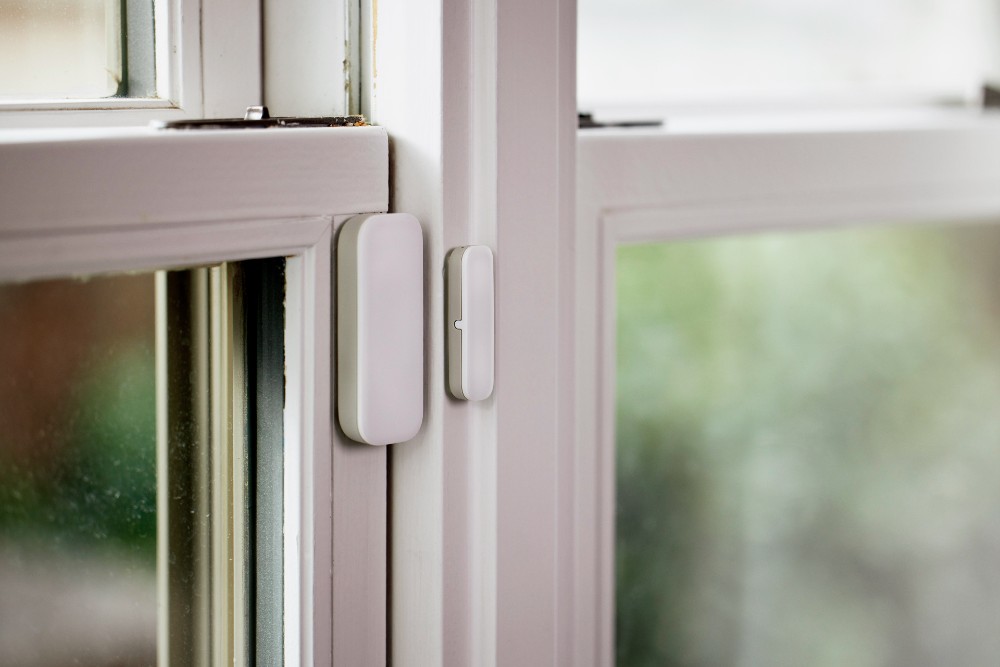
A window sensor is a two-part security device, made up of a reed switch and a magnet, that detects when a window is opened and then triggers an alarm.
One of the most basic functions of a home security system is to alert you to unauthorized entry into your home, usually by sounding a loud alarm. When your alarm is set and someone opens your front door or breaks a window and crawls in, it will trigger your system and sound the alarm. The window (and door) sensors make this possible, and every home security system should come equipped with them.
The sensor is comprised of two parts—a contact sensor (called a reed switch) and a magnet. There are types of door and window sensors that can be hardwired into your alarm system, but most are battery-powered, wireless sensors.
Related article
A Complete Guide to Security Sensors
How do window sensors work?
Most window and door sensors basically work the same way. Unlike motion sensors, which use motion to trigger an alarm, window sensors are triggered by the act of opening a window.
Here's how window sensors work:
- The magnet is placed on the window itself
- The reed switch (contact sensor) is placed on the window frame
- When the window is closed, the two parts join together and form a magnetic conact
- Opening the window breaks the magnetic contact between the sensor and magnet
- The broken contact sends a signal to your alarm panel, triggering an alert
Keep in mind that these types of sensors only work when an already-closed window opens. If someone broke a window, it would not trip the sensor because the window contact between the two parts would still be intact. In order to detect breaking glass, you'll need a glass break sensor. This type of sensor measures the decibel level of breaking glass and triggers your security alarm if that level is detected.
How do window sensors work with your security system?
If you really want to protect your home, a security system is the way to go; in fact, homes with security systems are 300% less likely to be broken into than homes without. Window sensors are part of a well-rounded home security system and work to provide an extra layer of protection and peace of mind.
When part of a Vivint smart home automation system, window and door sensors work with other smart devices and functions to help protect your home and family. Here’s what could happen if a burglar tried to enter your home through a window:
- The sensor's contact is broken when the window opens, triggering an alarm
- You receive a notification on your phone, telling you which sensor was triggered
- The professional monitoring center contacts you to determine whether or not it was a false alarm
- If wanted, the monitoring center contacts the police for you
- You check your camera footage from your phone after receiving a notification and see someone approaching your window and opening it
- You give the footage to the police to assist in their investigation
Your Vivint system includes multiple sensors and smart devices that integrate together to protect your home, whether you’re at home or away.

Free Bonus Download: Vivint Doorbell Camera Pro Guide
Why does your alarm system need window sensors?
There are many benefits to having both door and window sensors as part of your system. Some of these include:
- Discourage break-ins. The most obvious benefit to sensors is that they discourage break-ins and burglaries. Because most burglars want to get in and out of your home as quickly and quietly as possible, a loud window or door alarm serves as an effective deterrent.
- Protect your most vulnerable areas. The overwhelming majority of burglars enter a home through a door or first-floor window. Window and door sensors provide protection to these vulnerable entry points.
- Alert you to open windows and doors. Unless they’re out of town, most homeowners don’t keep their security systems armed 24/7. But it’s still helpful to know if a window or door opens. With window and door alarm sensors, you can set your window or door to play a chime whenever it opens. This is particularly helpful to parents or caregivers.
- Easy DIY installation. Installing wireless door and window sensors is an easy DIY project pretty much anyone can do. And because battery life is typically long-lasting, they are low maintenance security add-ons for any home. (If your sensors are part of a smart home security system, professional installation is recommended to ensure they connect with your alarm system.)

Vivint Window Sensor
Vivint’s security sensors include window sensors, and come with a number of features and benefits, including:
- White or gray color options
- Small, unobtrusive design: 2.7″ h x 1.0″ w x 0.5″ d (sensor), 1.4″ h x 0.6″ w x 0.4″ d (magnet)
- Easy installation with screws and adhesive (although professional installation is included with all Vivint systems)
- Wireless sensor with 1 CR2032 battery and a long, 5-year battery life (depending on usage)
- Low battery alert to remind you to change batteries
- Indoor use on other items you want to monitor, including cabinets, safes, and more
Related article
Door Sensors: How They Work and Why You Need Them
Protect your home’s access points with Vivint
With a smart home security system from Vivint, you can keep your home secure around the clock. Contact our Smart Home Pros today at 855.822.1220 to learn more.
Frequently asked Window Sensor questions
Do window sensors detect broken glass?
No, window sensors only detect when a window is opened. To detect breaking glass, you need a separate glass break sensor.
Can window sensors be used on doors?
Yes, window sensors work the same way as door sensors and can be used on both windows and doors.
How are window sensors installed?
Window sensors are installed by placing the magnet on the window and the reed switch on the frame, using screws or adhesive. Professional installation is recommended for smart home systems.
How long do window sensor batteries last?
Most wireless window sensors have long battery life, some up to 10 years depending on usage.
Get a free quote today.
A Vivint Smart Home Pro will contact you within 24 hours. Or skip the form and call now: 844.481.8630.
Everything works together
Combine products
for a safer home
You may also like:
Home Security
Door Sensors: How They Work and Why You Need Them for Home Security
Nov. 05, 2026

Home Security
Vivint Professional Monitoring: Award-Winning Protection 24/7
Discover the awards and recognition Vivint’s 24/7 Professional Monitoring has received that help provide reliable support and alarm response when it matters most.
Oct. 13, 2026
Home Security
Carbon Monoxide vs. Carbon Dioxide: Which Detector Does Your Home Need?
Carbon monoxide and carbon dioxide sound alike, but only one is an urgent home threat. See how they differ and whether your home needs a CO detector.
Oct. 12, 2026
Related Content
-
Home Security Sensors
Get Home Security Sensors that include Glass break, Motion Sensors, Door & Window Sensors. Call 844.394.7448 to learn more about securing your home.
-
Window Alarms & Door Sensor
Vivint’s Window Alarms & Door Sensors will sound an Alarm if your Windows or Doors are opened while your system is armed. Call 866.955.5072 to Learn More.
-
Door Sensors: How They Work and Why You Need Them for Home Security
Discover how door sensors work and why they’re essential for securing your home. Learn about the different types, features, and benefits of door sensors.


