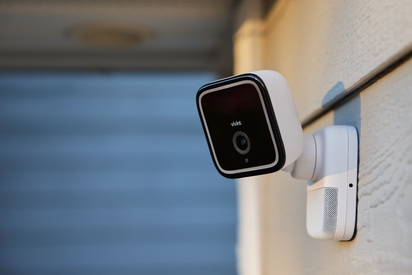
The Outdoor Camera Pro 3 takes smart features and functionality to the next level with powerful upgrades that protect your home and vehicle more accurately than ever.
How to Make a Home Inventory for Insurance
A home inventory is a documented record of all your personal belongings, including descriptions, photos or videos, and estimated values. It is used to support insurance claims after theft, fire, or natural disasters.
After a kitchen fire, an insurance adjuster needs a list of everything that was in the room: the stand mixer, the espresso machine, the knife block, the cabinets full of dishes. Standing in the wreckage, almost nobody can produce everything from memory
Only 47% of homeowners keep a home inventory, so more than half end up reconstructing their belongings from receipts they can't find.
If you already have security cameras, the same footage that watches your front door can document your belongings and can potentially be used for a home inventory for insurance purposes.

Does a home inventory get an insurance claim paid faster?
A complete inventory is one of the best ways to protect what you own against a fire or other covered disaster, and it gets a claim settled faster and with less of a fight. Good documentation tends to move the claims process along more quickly
An inventory also helps you see if you need additional insurance coverage. Most policies include a coinsurance requirement, often called the 80% rule: if you insure your home for less than 80% of its replacement cost, the insurer can cut what it pays on a claim.
Walking your home with a camera is a fast way to see how much your belongings are really worth and whether you still carry adequate insurance on your dwelling. If it doesn't, that's a conversation to have with your insurance agent before a loss.
Note for renters: Home inventories are equally important for renters insurance claims. The same documentation principles apply whether you own or rent your home.
Related article
How a Security System Can Get You an Insurance Discount
4 ways to document your home for insurance purposes
Any record beats no record, but they're not all the same. Here are the four common methods, ranked by how quickly and easily they tend to get a claim paid.
| Method | Speed to Payout | What It Proves | Effort Required |
|---|---|---|---|
| Photo grid | Slowest | That items existed, but not their condition, value, or date | Low |
| Written list or app documentation | Slow | Detail and serial numbers, but a list alone is easy to question | High |
| Video walkthrough | Fast | Quantity and condition | Medium |
| Timestamped security camera footage | Fast | Date-stamped condition and quantity an adjuster can't easily dispute | Low once your cameras are set up |
A folder of photographs is better than nothing, and a written home inventory list or one of the many home inventory apps (the mobile apps built for this) adds detail, serial numbers, and the purchase dates an adjuster wants.
But both require you to keep them current, and both are easier to wave off than live footage. A video walkthrough fixes most of that in one pass, but timestamped camera footage does it with the least ongoing effort, because the cameras are always recording.

How to use security cameras as a home inventory
Every camera keeps a constant eye on the room or area it covers. With Vivint Playback, that becomes continuous, timestamped footage—a running record of whatever's in frame, requiring no ongoing effort. For the spots a fixed camera can't reach, document with your phone camera. Here are some tips:
- Let each indoor camera document the room it sees. An indoor camera keeps a dated record of whatever sits in its view. Save a copy of this footage so you have documentation of your belongings..
- Let the outdoor camera cover what's outside. An outdoor camera can document anything within its field of view.
- Record everything else with a phone walkthrough. A fixed camera can't see inside closets and drawers, reach the attic, or hold a close shot on a serial number. Once or twice a year, record the rest on your phone, room by room, so nothing important is missing.
- Save it somewhere safe. Store footage off your property (in the cloud, your email, or a safe deposit box) the same way you'd keep any important record.
Download our home security camera guide.
Indoor, outdoor, doorbell—we’ve got them all. Learn how security cameras can protect your home and family with this free guide.
What to capture in every room
Use this home inventory checklist, room by room, and make sure these get on the record, with serial numbers, receipts, and appraisals wherever they exist:
- Kitchen. Major appliances, small appliances, silverware, and the cabinets behind closed doors.
- Living and dining rooms. Electronics, the TV, furniture, artwork, antiques, and any rug worth appraising.
- Bedrooms. Jewelry, watches, and other valuable items, plus closets full of clothing and linens.
- Home office**.** Computers, monitors, and equipment, with model and serial numbers in frame.
- Garage, attic, and basement. Tools, the lawn mower, sports gear, and collectibles in storage.
- Commonly forgotten areas. Don’t forget closets, attics, basements, and outdoor areas that hold grills and patio furniture. These overlooked areas can represent thousands of dollars in value.
Note purchase dates and keep receipts with the footage where you can; together they settle questions about ownership and value long before an adjuster has to ask.
Build it before you need it
An inventory only works if it already exists before a theft or disaster. Vivint cameras protect your home while you're living in it and may help document it for the day something goes wrong. See what a setup looks like and protect and document your home with Vivint.
Related article
What to Do in the First 48 Hours in a New House
Frequently asked questions
A few questions come up a lot when people start a home inventory.
How do you make a home inventory for insurance purposes?
Go room by room and record what you own, what it's worth, and proof you had it. Follow these steps:
- Start at the front door and state the date
- Pan slowly through each room, opening closets and drawers
- Call out items worth $100 or more with brand and value
- Capture serial numbers and receipts for high-value items
- Save the recording off-site
What should you photograph for home insurance?
Anything you'd want reimbursed: electronics, appliances, jewelry, art, collectibles, and furniture. Capture serial numbers and any receipts or appraisals, and don't skip closets, drawers, and the garage.
Do smart home cameras help with insurance claims?
Yes. Timestamped footage shows what you owned and what condition it was in, which is harder to dispute than a list. Download clips to give to an adjuster as clear evidence to work from.
What is the 80% rule for homeowners insurance?
It's a coinsurance rule: insure your home for at least 80% of its replacement cost, or the insurer can reduce what it pays on a claim. An inventory helps you see whether your coverage still keeps up.
How long should you keep your inventory and footage?
Keep the inventory for as long as you own the items and update it when you buy something major. Because camera footage isn’t saved indefinitely,, download your walkthrough clip and store it so it lasts.
Get a free quote today.
A Vivint Smart Home Pro will contact you within 24 hours. Or skip the form and call now: 844.481.8630.
Everything works together
Combine products
for a safer home
You may also like
Security Cameras
Vivint Outdoor Camera Pro: Meet the Smartest Outdoor Camera on the Market
Feb. 04, 2026

Smart Guides
The Vivint Buying Guide: What's Included, Average Cost, and How to Buy
Interested in a Vivint Smart Home system but still have some questions? We've got answers for the most frequently asked questions about our security systems.
Nov. 07, 2019

Home & Family
10 Things You Probably Didn’t Know About Vivint
Vivint Smart Home is the number one smart home service provider in North America, and enhances the lives of children with intellectual disabilities through Vivint Gives Back.
Feb. 02, 2018
Related content
-
Home Automation Services for Smarter Living
Control Security Equipment & Smart Home Devices with a Vivint Home Automation System. Call 855.747.4838 for More Information about our Award Winning 24/7 Smart Home Automation Systems.
-
Security Camera Systems
Vivint's Home Security Cameras System allows you to keep an eye on your home via Indoor Security Camera & Outdoor Security Cameras all Accessible through Vivint’s App. Call 855-743-7375 to ...
-
Vivint Services
Home Security Services & Business Alarm Monitoring with Professional Installation with any Vivint Package Call 844.395.9444 to Learn More about our Award-Winning 24/7 Monitoring Services


