As the school year begins, households shift into new routines like early mornings, packed schedules, and kids returning home before parents. While families focus on backpacks and lunchboxes, they may be overlooking a more serious issue: home security. Vivint surveyed 1,000 American parents to uncover how the back-to-school season impacts safety habits at home. The findings reveal surprising vulnerabilities that arise, from forgotten door locks to unsupervised kids managing alarm systems on their own.
Key takeaways
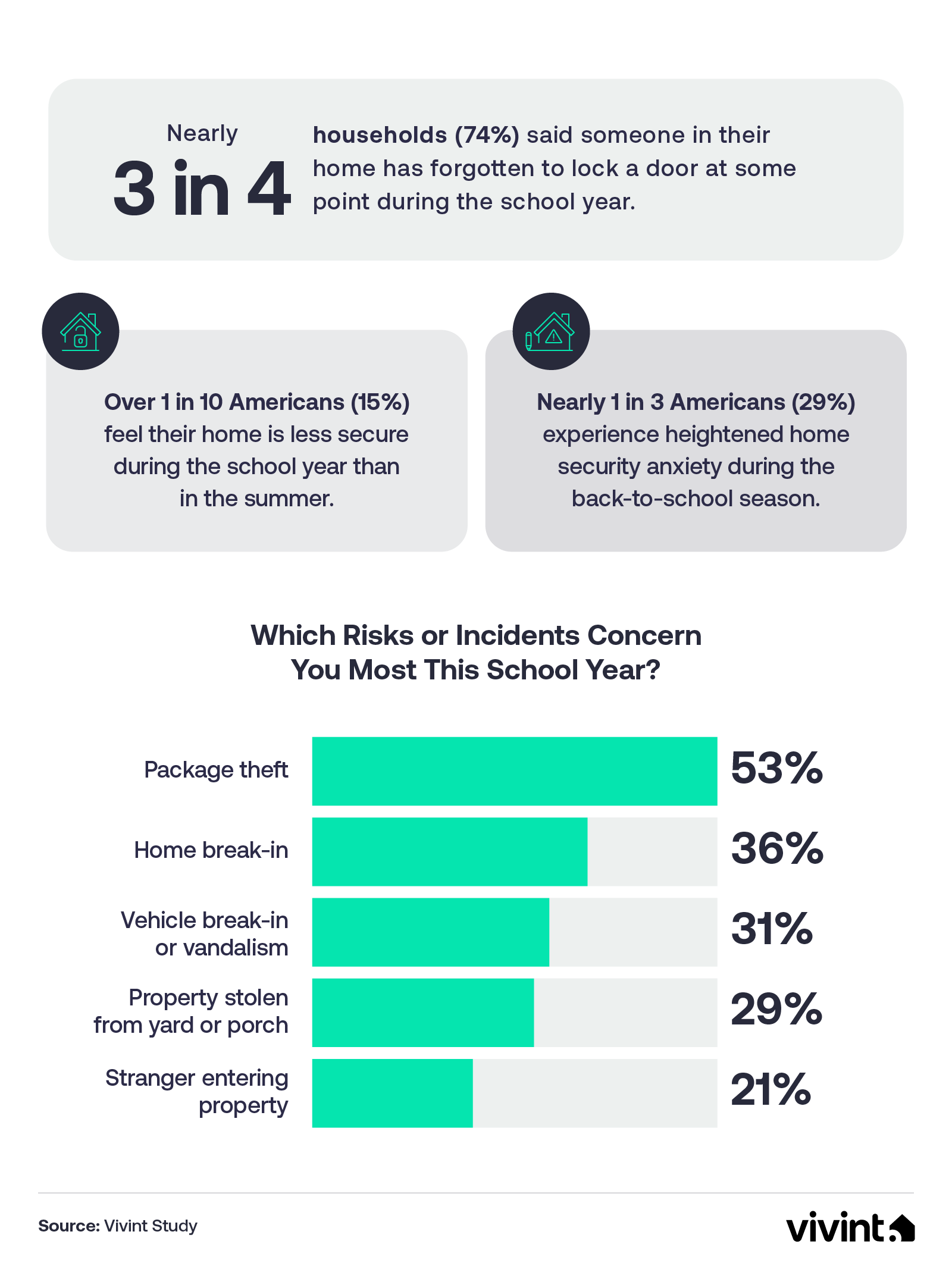
- Over 1 in 10 Americans (15%) feel their home is less secure during the school year than in the summer.
- Nearly 3 in 4 households (74%) say someone in their home has forgotten to lock a door at some point during the school year.
- Nearly half of households (47%) say someone has forgotten to close the garage before leaving in the morning during the school year.
- Nearly 1 in 5 Americans (19%) say they've caught a stranger or delivery person peeking inside their home or garage, either in person or on security camera footage.
- Of those who have a security system in place, 4 in 5 (80%) say it makes them feel more secure.
Morning chaos leads to forgetfulness and security gaps
The rush to get out the door on time often means security slips through the cracks.
Nearly 3 in 4 households admitted someone in their home forgot to lock a door during the school year, a habit that could leave homes exposed to break-ins. Garage doors were another common problem, with 47% of respondents saying someone had left theirs open before leaving for the day. And 55% said they had forgotten to close a window before heading out.
More than 3 in 5 Americans (62%) said they've driven away and turned back because they couldn't remember if they locked up. In the scramble of early mornings, this forgetfulness is common and understandable, but it can create serious security risks.
Some habits are less about forgetfulness and more about convenience. Over 1 in 5 Americans (22%) admitted to hiding a spare key outside their home, such as under a doormat, rock, or planter. While meant to be helpful, this tactic can also make it easier for intruders to gain access.
When asked which entry points they worry about leaving unlocked during busy mornings, 45% said the front door, followed by the garage (19%) and the back door (13%). Only 16% said they always double-check everything before leaving, which shows how rushed routines can interfere with good back-to-school security practices.
Adding to these concerns, 15% said their home feels less secure during the school year compared to the summer months. This is a reminder that small lapses in routine can add up to larger vulnerabilities over time.
Kids coming home alone raises new safety concerns
Once kids return home on their own after school, new challenges emerge around managing home access safely.
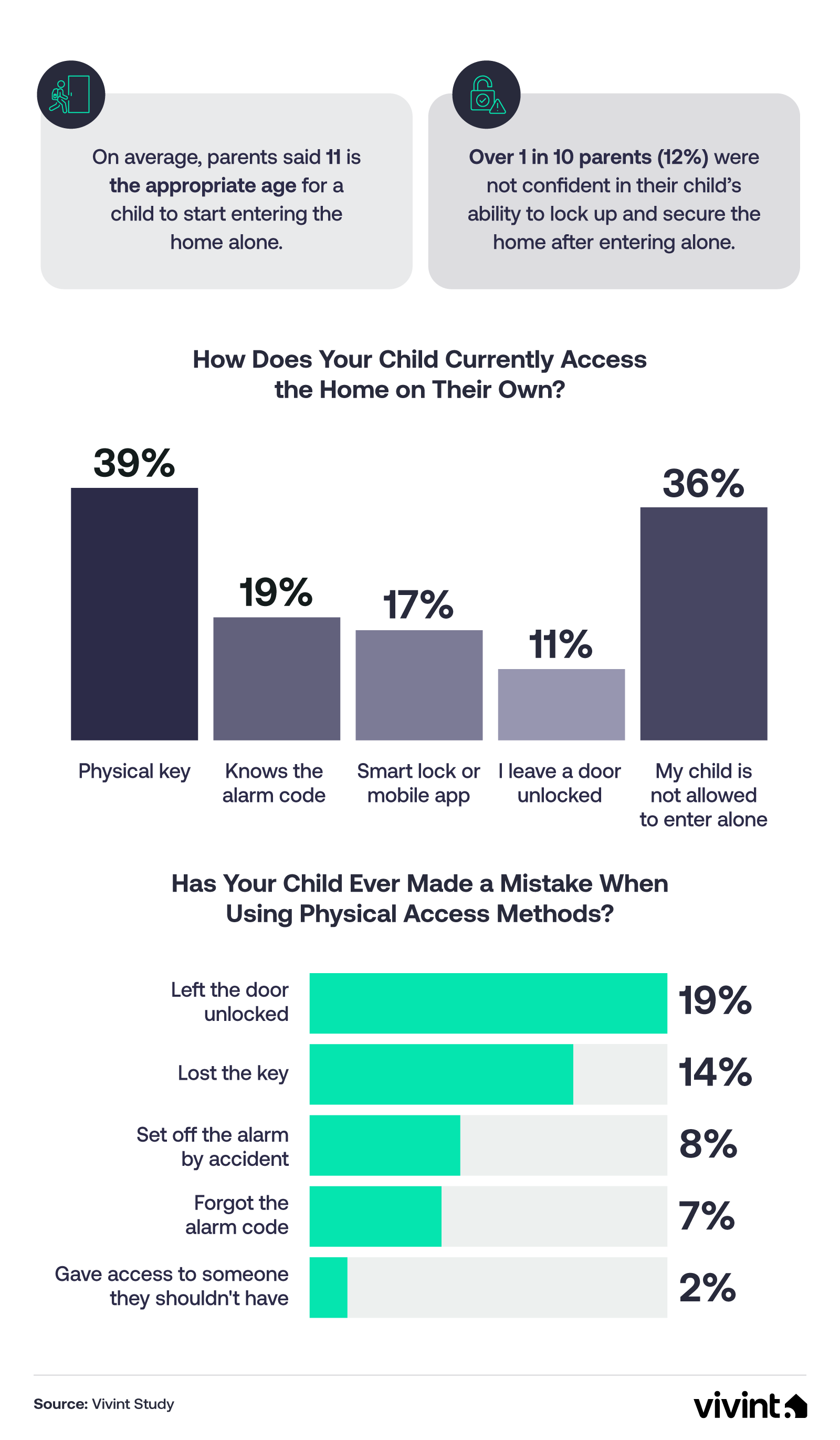
On average, parents said age 11 is an appropriate time for a child to begin entering the home alone. However, nearly 1 in 3 parents (30%) said they don't believe kids should be home unsupervised until age 13 or older. Another 17% reported disagreeing with a co-parent or partner on how to handle their child's home access.
Not all parents feel confident in their child's ability to manage security responsibilities. Over 1 in 10 parents (12%) said they don't trust their child to properly lock up and secure the home when entering alone.
When it comes to access methods, 39% of children use a physical key, while others rely on alarm codes (19%) or smart locks and mobile apps (17%). Surprisingly, 11% of parents said they leave a door unlocked, and 36% reported that their child is not yet allowed to enter the home alone.
Even among those who do use physical or digital access, mistakes are common. Nineteen percent of children have left the door unlocked, and 14% have lost their key. Other errors include setting off the alarm by accident (8%), forgetting the alarm code (7%), or giving access to someone they shouldn't have (2%). Among kids using traditional physical access methods like keys or alarm codes, up to 45% have made at least one mistake, such as leaving the door unlocked or triggering the alarm.
Increased activity around the home invites unexpected risks
Afternoons can be just as unpredictable as mornings, especially when kids come and go while parents are still at work.
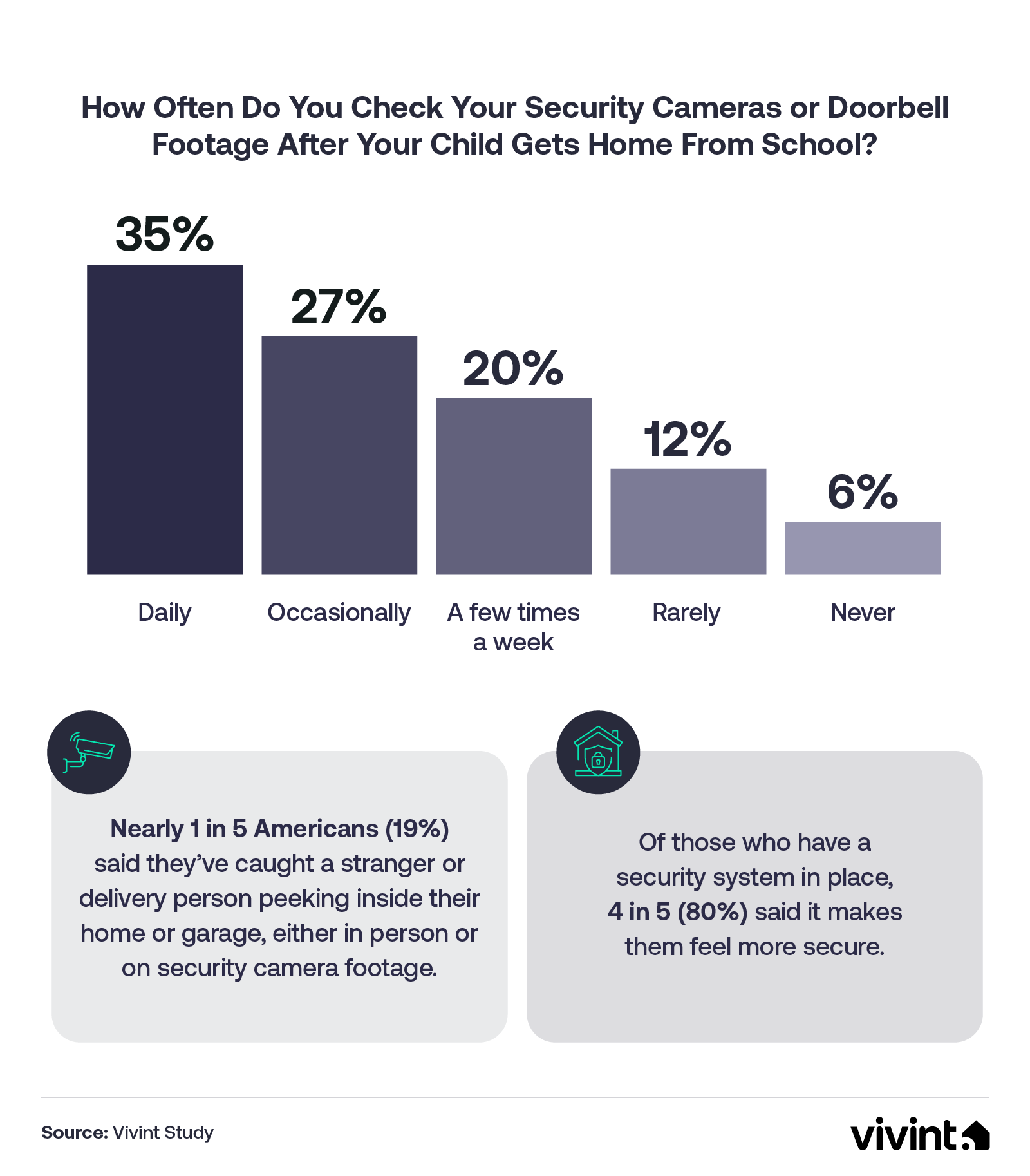
Nearly 1 in 5 Americans (19%) said they've caught a stranger or delivery person peeking inside their home or garage, either in person or via security camera footage. These intrusions, though often brief, raise concerns about how exposed homes can be during busy hours.
Many parents are taking precautions. Thirty-five percent said they check their security cameras or doorbell footage daily after their child arrives home from school. Another 27% do so occasionally, while 20% review footage a few times per week. Just 6% said they never check it.
Even with smart tech in place, unexpected issues still arise. Over 1 in 10 parents (14%) said they discovered their child had brought someone home without letting them know. Open conversations may help, and 1 in 3 parents said that they regularly discuss home security expectations with other parents or guardians.
Despite the risks, 2 in 5 Americans (40%) admitted to intentionally leaving doors unlocked during after-school hours. That said, there's a strong sense of reassurance among those with systems in place. Four in five (80%) said their home security system makes them feel more secure.
Conclusion: Staying safe while settling into new routines
Back-to-school season is a time to revisit home safety. As families settle into new routines, forgotten lockups, unsupervised entries, and rising foot traffic can all increase household vulnerability. But by staying mindful and leveraging smart home technology, parents can create a safer environment for everyone at home.
Methodology
We surveyed 1,000 American parents to explore the surprising ways back-to-school season affects home safety. The average age of respondents was 40; 61% were women, 39% were men, and 1% were non-binary. The generational breakdown of respondents was as follows: Gen Z (7%), millennials (64%), Gen X and baby boomers combined (29%). Due to rounding, some percentages in this study may not total 100% exactly.
Fair use statement
We welcome the sharing of this study for noncommercial purposes. Please include a link back to this page to credit Vivint and access the full findings and methodology