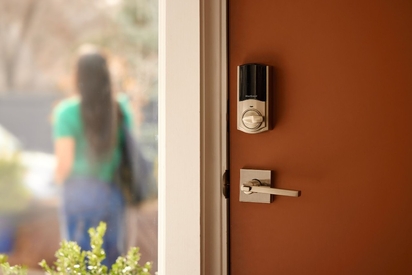
Smart door lock vs. traditional lock: compare cost, security features, remote access, and key control to choose the best lock for your home.
Is Smart Home Tech Worth It? Real Benefits & Drawbacks
Smart home technology is growing fast, and it's not slowing down anytime soon. According to recent Smart Home market revenue projections, the global market was valued at $117.6 billion in 2022 and is expected to reach $222.9 billion by 2027, growing at a compound annual rate of 12.47%. This surge reflects how quickly homeowners are adopting smart home systems to make their lives more convenient, secure, and efficient.
Today, 85% of homeowners have at least one smart home device. As connected devices become more affordable and widely available, expectations have shifted. Homeowners are now looking for more than just traditional security or lighting—they want integrated ecosystems that deliver energy efficiency, real-time control, and seamless functionality across their homes.
This guide evaluates the real value of smart home technology today, weighing both its benefits and limitations so you can decide if it's a smart fit for your lifestyle.
What is smart home technology?
Smart home technology refers to a collection of connected devices and systems that automate, monitor, and control your home's environment. These tools use WiFi and IoT (Internet of Things) networks to communicate with each other and with you—usually through a centralized app, voice assistant, or hub.
A smart home system brings different categories of home automation together under one roof. This includes key areas like:
- Lighting
- Climate control
- Home security
- Appliances
Whether you're adjusting your thermostat from the road, receiving real-time alerts about activity at your front door, or scheduling your lights to mimic daily routines, smart home automation offers more personalized and efficient living than ever before.
Smart devices vs. automation systems
At their most basic, connected devices are individual gadgets—like a smart plug or speaker—that can operate independently using WiFi or a mobile app. These devices offer convenience but often lack full integration.
In contrast, home automation systems tie multiple devices together to work as a cohesive unit. A smart home automation setup may include lighting, HVAC controls, locks, and cameras that all sync within the same smart system. For example, you can turn off lights, lock doors, and adjust your thermostat with a single voice command or app routine.
These IoT-based ecosystems turn convenience into true coordination.
Common components of a smart home
Smart homes often begin with one or two devices, then grow into more advanced setups. Here are some of the most common components found in a connected home:
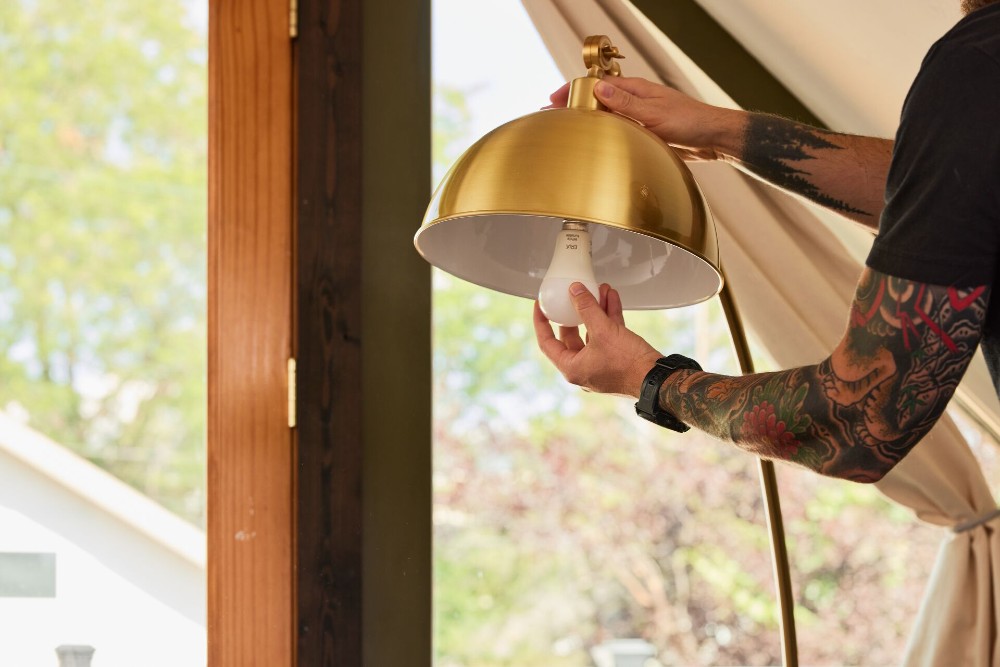
- Smart lighting. Replace traditional bulbs with WiFi-enabled light bulbs you can dim, schedule, or control remotely.
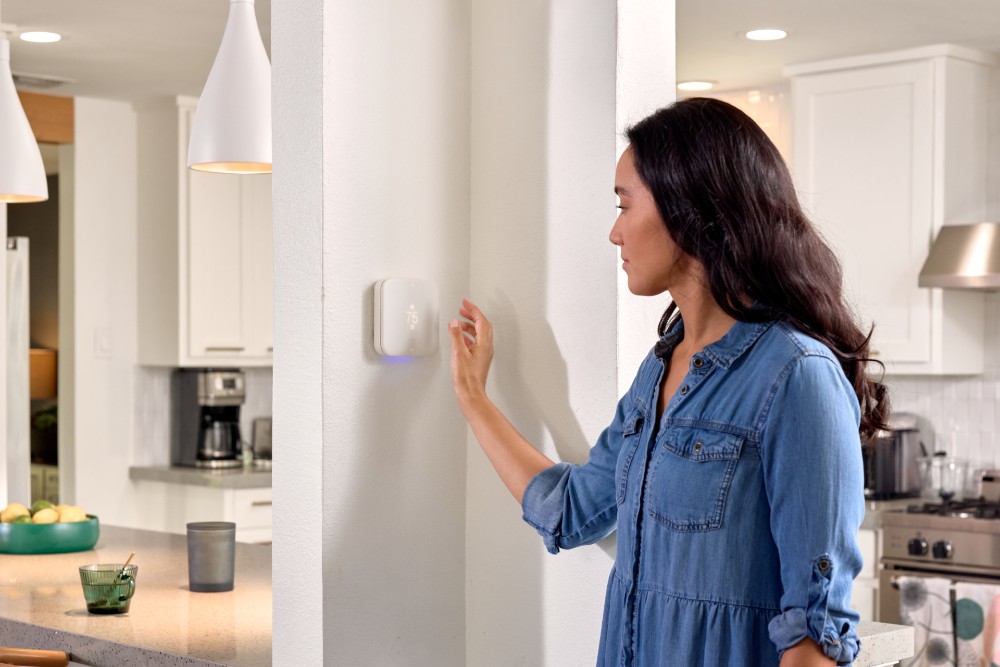
- Smart thermostats. Devices like Nest help regulate heating and cooling, improving energy efficiency.
- Smart locks. Keyless entry systems for your front door or garage that offer access control and peace of mind.
- Security cameras. Indoor and outdoor cameras that provide real-time monitoring and motion-triggered alerts.
- Smart speakers. Tools like Google Assistant that offer voice control for your entire ecosystem.
- Smart plugs. Simple tools that turn regular appliances into smart gadgets with on/off scheduling and energy tracking.
- Smart appliances. Connected home appliances such as refrigerators, ovens, and washing machines with built-in automation.
Each of these tools enhances daily routines, supports automation, and contributes to a smarter, more responsive home environment.
Download your free smart home guide.
Learn everything you need to know about the value and security of a smart home in one quick, easy read.
The pros of smart home technology
Smart home technology has evolved from a novelty into a practical, everyday solution for homeowners. Beyond the wow factor, today's smart home system offers measurable value in areas like energy savings, home security, and automation. Here are the key benefits of building a connected home.
Energy efficiency and utility savings
Smart devices and appliances can dramatically improve energy efficiency by reducing unnecessary consumption. Smart thermostats help regulate HVAC and air conditioning use based on your schedule, minimizing wasted energy. Smart lighting systems allow you to schedule or dim lights to match your daily routine, cutting down on energy use.
These upgrades can translate into long-term energy savings for homeowners, especially in larger homes or climates requiring heavy HVAC use.
Enhanced home security and monitoring
Modern smart home security setups include a wide range of protective features, from motion sensors and smart locks to full alarm systems and security cameras. Together, these tools offer real-time notifications and remote monitoring, giving homeowners greater peace of mind.
Whether it's checking who's at the front door or confirming your doors are locked before bed, smart home security delivers a layer of protection that traditional systems can't match.
Common security components include:
- Smart locks
- Security cameras
- Motion sensors
- Alarm systems
- Real-time notifications
Convenience and control via automation
Here are some of the ways home automation simplifies control for busy families and homes with multiple connected devices:
- Control lights, set timers, lock doors, and check devices remotely through voice commands
- Use Google Assistant for hands-free operation
- Set timers for automation routines
- Access and manage devices in real time
Potential to increase home value
Smart home upgrades can make properties more attractive to buyers, especially when integrated into a cohesive smart home system. Many homeowners find that modern features like home automation, energy efficiency tools, and connected security add both comfort and resale appeal.
IoT devices—such as smart thermostats, lighting, locks, and security systems—have been shown to increase a property's resale value by up to 5%. Plus, 77% of home buyers say they are interested in smart homes, showing strong demand for connected features.
For homeowners looking to boost home tech appeal and efficiency, these upgrades can be a smart long-term investment.
Related article
Can a Smart Thermostat Save You Money?
The cons of smart home technology
From cost considerations to technical challenges, here are some common concerns homeowners should be aware of.
High upfront costs and ongoing expenses
The initial cost of building a smart home can be significant. While some smart plugs or individual gadgets are affordable, fully integrated home automation systems—especially those with smart appliances and hubs—require a larger investment.
Costs to consider include:
- Device purchases such as smart thermostats, cameras, and locks
- Smart appliances, which typically cost more than traditional models
- Ongoing costs for subscriptions, software updates, or monitoring services
- Occasional replacements or tech support for aging devices
These expenses can add up over time, especially as technology develops and newer models replace existing ones.
Device compatibility and technical issues
One of the biggest frustrations for users is device compatibility. Not all smart home devices work across brands, and some are limited to specific platforms like Google Home, Apple HomeKit, or Amazon Alexa.
Common compatibility concerns include:
- Ecosystem limitations that prevent devices from syncing
- Platform-specific features that restrict cross-device use
- Connectivity issues during setup or automation
- Inconsistent app experiences between brands
Choosing a smart home system with broad support can reduce these issues and simplify your setup.
Dependency on stable internet access
Nearly all smart systems rely on a strong and consistent internet connection to function properly. Without it, functionality can be limited or even lost.
Connectivity issues to consider include:
- System-wide failures during internet outages
- Slower performance on weak WiFi networks
- Delayed automation routines or commands
- Reduced control of smart systems while away from home
A stable internet connection is essential for maintaining the performance and reliability of any smart home system.
Smart home products that are actually worth it
With so many devices on the market, it can be tough to know which smart home products offer real value. The best options deliver a strong balance of convenience, efficiency, and reliability, especially when they integrate well into your broader smart home system.
Whether you're starting small or building a full ecosystem, these upgrades are consistently worth considering.
Smart speakers and hubs
Smart speakers like Google smart speakers are voice-controlled command centers for many homes. Devices powered by Google Assistant make it easy to manage lighting, locks, and other connected tools through simple voice commands. These speakers work across ecosystems and offer helpful functionality for you, your guests, and your kids.
They also pair well with the Vivint Smart Home setup, expanding your control across devices such as security cameras, thermostats, and smart locks.
Smart lighting systems
Smart lighting is one of the easiest and most affordable ways to upgrade your home. With options like smart bulbs, light bridges, and plugs, these systems offer immediate convenience and long-term energy savings.
Popular smart lighting features include:
- Smart bulbs that adjust brightness, color, or schedule
- Smart plugs that turn traditional lamps into automated lighting
- Timers and routines that mimic your daily schedule
- Compatibility with energy-saving platforms and apps
Smart security systems
A well-designed smart home security system offers layered protection and 24/7 peace of mind. With Vivint, homeowners get a professionally installed security system that combines real-time monitoring, smart automation, and a centralized control hub.
These systems simplify home security by integrating all components—security cameras, sensors, and alarm systems—into a single platform. Whether you're home or away, you receive instant notifications, control access points remotely, and check camera feeds from your phone.
Smart home security system features include:
- Smart home security devices that work together across one app or hub
- Security cameras with live streaming and person detection
- Alarm systems that alert you and monitoring teams in real time
- Notifications for events like unexpected movement or opened doors
For homeowners who value control and reliability, Vivint's all-in-one approach delivers safety without the hassle of managing multiple disconnected devices.
Smart door locks and access control
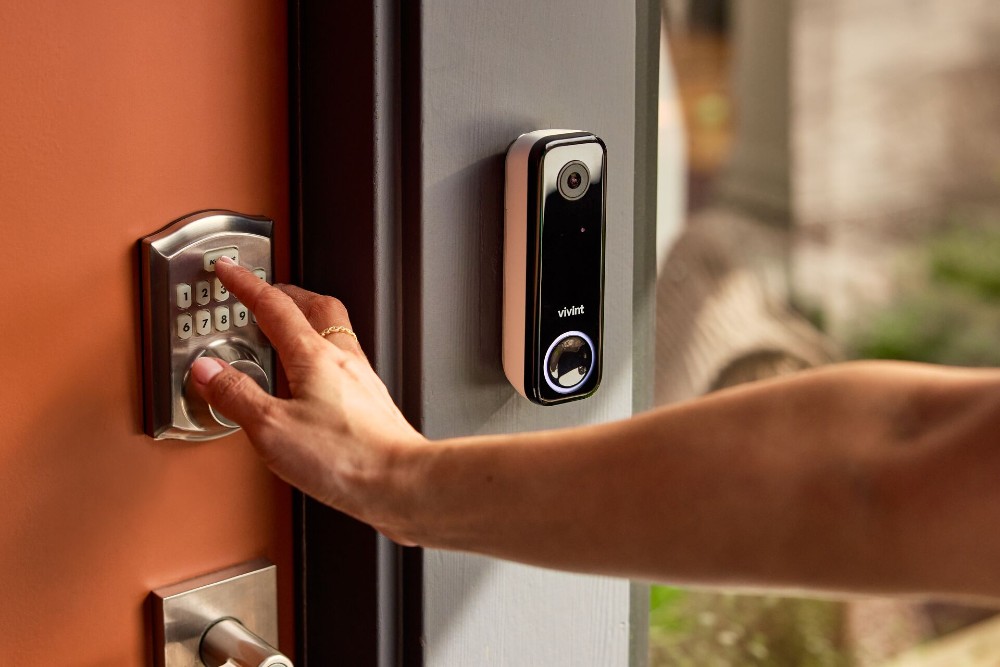
Smart locks make it easier to manage access to your home without relying on keys. You can control entry from your phone, set up unique codes for guests, or use voice commands to lock and unlock your doors.
With Vivint smart lock, users can monitor and control the front door or garage door remotely, giving families and renters more flexibility and peace of mind.
The key benefits of smart door locks are:
- Keyless access via app or code entry
- Voice commands for locking and unlocking
- Instant notifications when someone enters
- Secure, remote control of main access points
These systems are especially helpful for households with children, renters, or regular visitors who need easy but secure access.
Smart thermostats and energy tools
Smart thermostats are one of the most valuable upgrades for managing energy use, especially in homes with large HVAC systems. These devices learn your routine and can be adjusted from anywhere, helping reduce waste and improve overall efficiency.
The Vivint Smart Thermostat works with existing heating and air conditioning systems and supports voice commands, giving you full control over your home's comfort settings even when you're away.
Smart thermostat features that improve energy efficiency include:
- Easy scheduling based on daily habits
- Remote access through mobile apps or voice assistants
- Integration with HVAC systems and platforms like Nest
- Real-time adjustments through the app that help lower energy use
Related article
Zigbee vs. Z-Wave
Cost vs. value of a smart home
Smart home technology offers a range of practical benefits—but is it truly worth the investment?
In this section, we'll break down the actual costs and potential returns associated with smart home systems. From upfront device purchases to long-term savings on energy and insurance, this analysis will help homeowners make informed decisions about integrating smart technology into their daily lives.
Installation and device costs
The initial cost of building a smart home can vary widely depending on the scope and setup. For those who opt for DIY smart home devices, expenses may be limited to a few hundred dollars for essentials like smart plugs, light bulbs, and smart speakers.
However, more advanced home automation systems—especially those that include a central home hub, professional monitoring, or integrated HVAC and security features—can push costs into the thousands.
While DIY systems offer lower startup costs, they may require more technical knowledge and hands-on management. Professional installations, such as those provided by Vivint, come with expert setup, enhanced reliability, and long-term support—factors that many homeowners find worth the added investment.
Long-term value for resale and insurance savings
Beyond monthly savings, smart home technology can also contribute to long-term financial gains. Homes equipped with smart security features, like alarm systems and security cameras, often qualify for home insurance discounts.
Additionally, many homeowners find that tech-enhanced properties are more attractive to buyers, potentially boosting resale value. Integrating smart thermostats, locks, lighting, and surveillance into your home's infrastructure may increase perceived value and marketability, especially in competitive housing markets.
With growing interest in home security and energy efficiency, these features are strategic upgrades that can pay off in the long run.
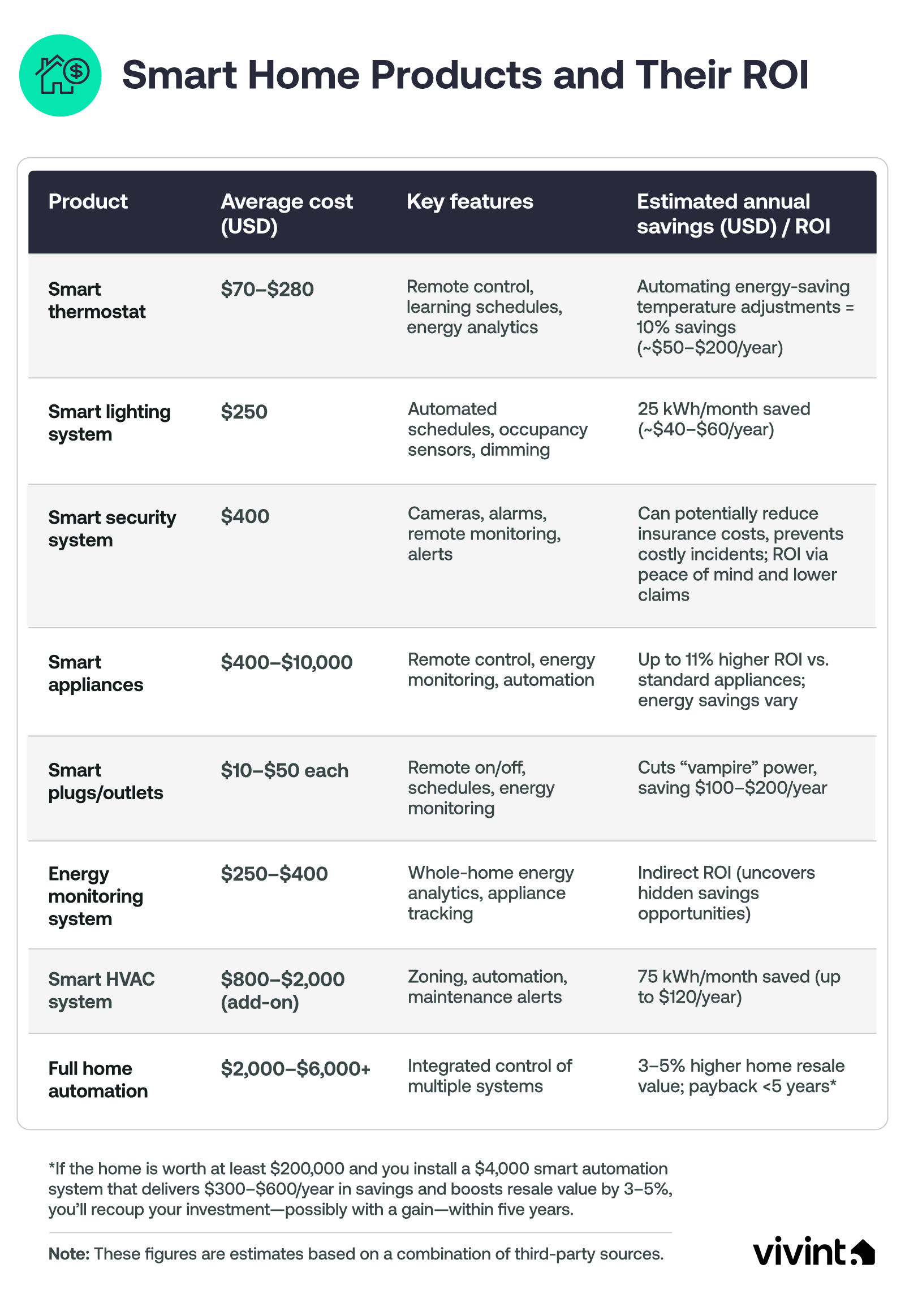
Smart home products and their ROI
| Product | Average cost (USD) | Key features | Estimated annual savings (USD) / ROI |
|---|---|---|---|
| Smart thermostat | $70–$280 | Remote control, learning schedules, energy analytics | Automating energy-saving temperature adjustments = 10% savings (~$50–$200/year) |
| Smart lighting | $250 | Automated schedules, occupancy sensors, dimming | 25 kWh/mont saved (~$40–$60/year) |
| Smart security system | $400 | Cameras, alarms, remote monitoring, alerts | Reduces insurance, prevents costly incidents; ROI via peace of mind and lower claims |
| Smart appliances | $400–$10,000 | Remote control, energy monitoring, automation | Up to 11% higher ROI vs. standard appliances; energy savings vary |
| Smart plugs/outlets | $10–$50 each | Remote on/off, schedules, energy monitoring | Cuts "vampire" power, saving $100–$200/year |
| Energy monitoring system | $250–$400 | Whole-home energy analytics, appliance tracking | Indirect ROI (uncovers hidden savings opportunities) |
| Smart HVAC system | $800–$2,000 (add-on) | Zoning, automation, maintenance alerts | 75 kWh/month saved (up to $120/year) |
| Full-home automation | $2,000–$6,000+ | Integrated control of multiple systems | 3–5% higher home resale value; payback <5 years* |
*If the home is worth at least $200,000 and you install a $4,000 smart automation system that delivers $300–$600/year in savings and boosts resale value by 3–5%, you'll recoup your investment—possibly with a gain—within five years.
Related article
DIY vs Pro Smart Home System Installation
Weighing the worth of smart home tech
Smart home technology offers value on multiple levels, from simplified daily routines to long-term energy savings. Devices like smart thermostats, lighting, locks, and hubs offer strong returns in convenience and peace of mind, as well as energy savings and even home value.
Build your smart home with Vivint to get professionally installed solutions that are designed for real life. Give us a call at 855.822.1220 to get started today.
Smart home technology FAQs
Smart home technology is popular these days, but many homeowners still have questions before making the leap. Below are answers to some of the most common concerns, from cost savings to installation and security.
Do smart home devices really save money?
Yes—many smart home devices are designed with energy efficiency in mind. Products like smart thermostats automatically adjust your home's temperature based on your routines, helping reduce unnecessary energy use. Likewise, smart lighting and appliances can be scheduled or automated to avoid wasted power. These features can lead to noticeable energy savings over time, especially in homes with high energy demands.
Are these systems easy to install and use?
Today's smart home systems are more user-friendly than ever. Most devices offer intuitive apps and quick setup, even for users new to smart gadgets. Many respond to voice commands through assistants like Alexa or Google Assistant, allowing for easy day-to-day control. While some systems require professional installation, many others are designed to work right out of the box with minimal configuration. We recommend professional installation to make sure that everything is installed correctly the first time so you can focus on learning how your system works.
How secure are smart homes from hacking?
There are several basic precautions you can take to safeguard your smart home from hacking. Smart devices may rely on your WiFi network, which can be a target for hackers. To protect your home security, use strong passwords, enable two-factor authentication where available, and keep your device firmware updated.
Choosing a reputable smart home security provider like Vivint adds another layer of protection and professional support.
Is smart home tech a good investment for renters?
Absolutely. While home automation is often associated with homeowners, there are plenty of smart devices that work well for renters. Smart plugs, smart lighting, and smart speakers require no permanent installation and can be taken with you when you move. These portable options allow renters to enjoy the convenience and efficiency of a smart home without modifying the property.
Get a free quote today.
A Vivint Smart Home Pro will contact you within 24 hours. Or skip the form and call now: 844.481.8630.
Everything works together
Combine products
for a safer home
You may also like:
Smart Home
Smart Door Lock vs. Traditional: Which Offers Better Security for Your Home?
Sep. 11, 2026
Smart Home
Do Security Cameras Work With Smart Home Systems?
Modern security cameras integrate seamlessly with smart home devices to form one ecosystem of whole-home control and protection.
Sep. 09, 2026
Smart Home
What Is a Smart Home?
A smart home connects lighting, locks, thermostats, and security into one app-controlled system. See the devices, setup, and costs for 2026.
Jul. 20, 2026
Related content
-
Are Smart Thermostats Worth It?
Discover the benefits of smart thermostats for energy savings, convenience, and comfort in your smart home. Are they worth the investment?
-
Home Monitoring Into the Future
The biggest questions of what remote home automation and home security can do for you and your family are answered here.
-
Smart Homes 2025: Trends, Pricing, and Buyer Insights
Smart homes cost nearly double traditional homes, with buyers willing to pay more for smart features. See pricing trends, top cities, and concerns.


