Smart door lock vs. traditional lock: compare cost, security features, remote access, and key control to choose the best lock for your home.
Smart Home for Detached Structures: Securing Sheds, Workshops, Barns & Outbuildings
Key takeaways
- A detached structure is any permanent building physically separated from your house by clear space
- Common examples of detached structures include detached garages, sheds, workshops, barns, gazebos, and pool houses
- Detached structures should be secured with locks, senors, cameras, motion-activated lighting, and monitoring
Your mower is parked in the barn. The kids' bikes are in the shed, your tools are spread across the workshop bench, and the ATV is under the pole barn. Now look at where your home security actually reaches: the back door. Everything past it is unprotected.
A detached structure is any permanent building on your property that stands apart from your house, separated by open space, such as a detached garage, storage shed, workshop, gazebo, pool house, or barn. These buildings might hold the priciest, easiest-to-resell gear you own, and they're usually the least-guarded spot on the property, which is exactly why they get targeted.
Home insurance helps after a break-in, but a standard policy only protects a detached structure for only about 10% of the amount your house is insured for, excludes wear and tear, and a theft still costs you a deductible and a claim on your record. Protecting your whole property means extending the same cameras, sensors, and monitoring you trust indoors out to every building, one structure at a time.
What counts as a detached structure in home insurance?
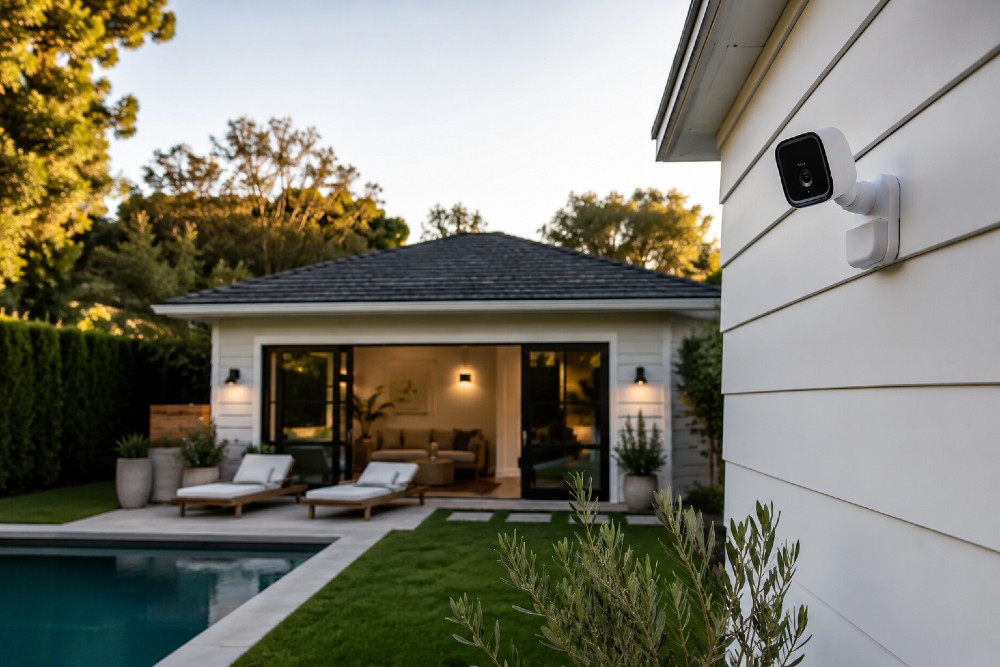
A detached structure is any permanently installed building that stands on your property, apart from your home, separated by clear space. Insurers group them under "other structures" or "separate structures" on a homeowners policy, and a permit office might call the same building a "detached accessory structure." Your house is the principal structure; almost everything else on the lot falls into this category:
- Detached garage: A standalone garage for vehicles, tools, or overflow storage
- Storage shed: A small building for mowers, yard equipment, and bikes, often with no power run to it
- Workshop: A powered space for woodworking, repairs, or hobbies, usually with large windows
- Barn or pole barn: A large structure for equipment, vehicles, livestock, or agricultural gear
- Pool house or guest house: A finished building with living space that people actually use
- Gazebo, carport, or pergola: Open or semi-open structures that add value and function
A breezeway connecting the house to a garage can blur the line between attached and detached, and a guest house with its own floor plan and living space is closer to a second home than an outbuilding. Local zoning and your building code set how far each structure stands from the house and the property lines, so a new build usually needs a site plan and building permits, and corner lots often face stricter setbacks.
Check how your policy and permits define each one so you know what's covered.
Attached vs. detached structures: What's the difference?
The distinction is important for insurance. Attached structures—like an attached garage or sunroom connected to your house—typically fall under Coverage A (dwelling coverage). Detached structures—any building separated from your home by clear space—typically fall under Coverage B (other structures coverage), which typically provides about 10% of your dwelling limit. Understanding this difference helps you know exactly what protection you have for each building on your property.
Check with your individual insurance provider to verify coverage and requirements.
What Coverage B typically excludes
Standard homeowners policies covering detached structures generally exclude damage from flooding, normal wear and tear, and structures used primarily for business purposes. If you run a business from your workshop or rent out a guest house, you may need additional coverage.
Download our home security camera guide.
Indoor, outdoor, doorbell—we’ve got them all. Learn how security cameras can protect your home and family with this free guide.
How to secure each type of detached structure
Protecting a detached structure comes down to three things: giving each structure its own reliable connection, matching the setup to the building, and protecting every structure with Vivint.
How to secure a detached structure:
- Install heavy-duty locks and reinforced hinges
- Add door and window sensors
- Install weatherproof cameras with night vision
- Use security lighting
- Connect everything to centralized monitoring
1. Give each structure its own reliable connection
Most people try to stretch their home Wi-Fi to a distant shed or barn, but the signal arrives too weak for steady video, so clips drop and alerts get missed. A cheap range extender rarely fixes that. A dedicated connection out to the structure does, and the farther the building stands from the house, the more it needs one.
Three approaches help here:
- A wired run. Ethernet gives you the steadiest link. The Outdoor Camera Pro uses Power over Ethernet, so one cable carries both power and data to a Wi-Fi bridge at the house.
- A dedicated access point. For a building within range, a mesh node or outdoor access point mounted on the structure gives the cameras their own strong signal instead of leftover Wi-Fi.
- A separate line for far buildings. A barn several hundred feet out may need its own internet drop to stay reliable.
Check the power outlets and network access near each structure before you plan the setup. Whatever the link, the cameras keep recording and Smart Deter keeps working even if the internet briefly drops, and professional monitoring stays active. For a building that's completely off the grid, it's worth reviewing the wired and cellular options before you choose equipment.
2. Match the setup to each building
The right setup depends on what each building holds and how it's built:
- Sheds. Often out of power range and packed with mowers, tools, and bikes. Add door and window sensors that trip the alarm when the door opens, a smart lock instead of a padlock, and a weatherproof camera where you can reach power or aim one from a nearby building. Motion detection covers the approach, so you get an alert before anyone's inside.
- Workshops. Powered, with large windows that make glass the weak point. A glass break sensor covers breaking glass across a wide radius, a motion sensor watches the floor, and an indoor camera with person-detection zones keeps an eye on the workbench. A smart lock on the entry door logs who comes and goes.
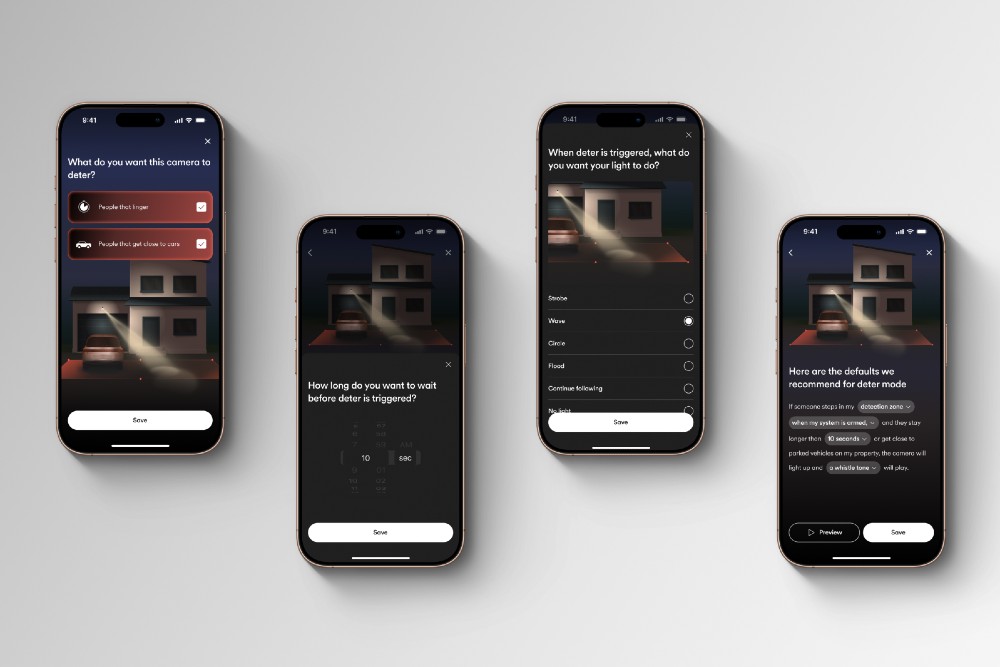
- Barns and pole barns. The largest structures, with several entry points and the highest-value equipment, vehicles, and trailers. Line the approaches with outdoor cameras, since Smart Deter™'s lights and sounds turn a would-be thief around and radar-enhanced detection flags anyone near a vehicle. Add motion and door sensors on the bay and sliding doors, and a smart lock on the man-door. The same approach that stops EV charger theft in a driveway protects the vehicles parked here.
3. Put every structure on one Vivint system
Every camera, sensor, and lock on the property connects back to the same Smart Hub and one app, so a tripped sensor at the barn gets the same 24/7 professional monitoring response as your front door. You arm and disarm everything together, see every camera on one screen, and get alerts wherever you are. The system works with Google Home for voice control, and a doorbell camera at a guest house or pool house handles visitors and packages the same way it does at the main door.
Related article
How Home Security Can Score You an Insurance Discount
Cover every structure on your property
Home security shouldn't stop at the back door. The mower, the tools, the equipment, and the vehicles parked across your property are worth protecting with the same cameras, sensors, and monitoring you already trust inside. Map each structure, get a solid connection to it, and match the devices to what's stored there. Cover every structure on your property with Vivint.
Ready to protect your detached structures? Contact a Vivint Pro today for a free quote at 855.822.1220.
FAQs
What is considered a detached structure?
A detached structure is any permanent building on your property that stands apart from the house, separated by open space, such as a detached garage, shed, workshop, gazebo, or barn. Insurers usually list them as "other structures" on a homeowners policy.
What is detached structure insurance?
Detached structure insurance is the Coverage B portion of a homeowners policy that covers buildings not attached to your house, typically up to 10% of your dwelling limit. This coverage protects structures like garages, sheds, and fences from covered perils such as fire, theft, and storm damage.
How do you secure a shed without power?
Wireless door and window sensors and a smart lock protect a shed even with no outlet, since they run on batteries and connect to your system. For video, aim a powered camera from a nearby structure at the shed.
What's the best security camera for a barn?
An outdoor camera with wide coverage, night vision, and active deterrence like lights and sounds suits a barn's size and multiple entries. Mount several to cover the doors and the equipment area rather than relying on one.
Can you use a cellular camera for an outbuilding?
Cellular data cameras exist for buildings with no internet, but a hybrid wired-wireless connection typically provides more reliable coverage. For a building that's completely off the grid, review the wired and cellular options before choosing equipment.
Get a free quote today.
A Vivint Smart Home Pro will contact you within 24 hours. Or skip the form and call now: 844.481.8630.
Everything works together
Combine products
for a safer home
You may also like:
Smart Home
Smart Door Lock vs. Traditional: Which Offers Better Security for Your Home?
Sep. 11, 2026
Smart Home
Do Security Cameras Work With Smart Home Systems?
Modern security cameras integrate seamlessly with smart home devices to form one ecosystem of whole-home control and protection.
Sep. 09, 2026
Smart Home
What Is a Smart Home?
A smart home connects lighting, locks, thermostats, and security into one app-controlled system. See the devices, setup, and costs for 2026.
Jul. 20, 2026
Related content
-
Home Automation Services for Smarter Living
Control Security Equipment & Smart Home Devices with a Vivint Home Automation System. Call 855.747.4838 for More Information about our Award Winning 24/7 Smart Home Automation Systems.
-
Security Camera Systems
Vivint's Home Security Cameras System allows you to keep an eye on your home via Indoor Security Camera & Outdoor Security Cameras all Accessible through Vivint’s App. Call 855-743-7375 to ...
-
Vivint Services
Home Security Services & Business Alarm Monitoring with Professional Installation with any Vivint Package Call 844.395.9444 to Learn More about our Award-Winning 24/7 Monitoring Services


